




Hiding

From 1942 until the end of the German occupation, around 28,000 Jews tried to escape the threatening situation they were in by assuming a different identity or going into hiding. Roughly a third of these people were betrayed or discovered; two-thirds lived to see liberation.
In the summer of 1943, the Reiner family also went into hiding and became what the Dutch called “undergrounders”. They received help from members of the Dutch resistance and from an employee of Jo Reiner’s expropriated company.
Who helped the Reiner family find a place to hide?
The Reiner family received help from Johannes Post, who came from the province of Drenthe in the northeast of the Netherlands. His cousin Jo and her husband, Jan van der Helm, were willing to hide a family in their farmhouse.
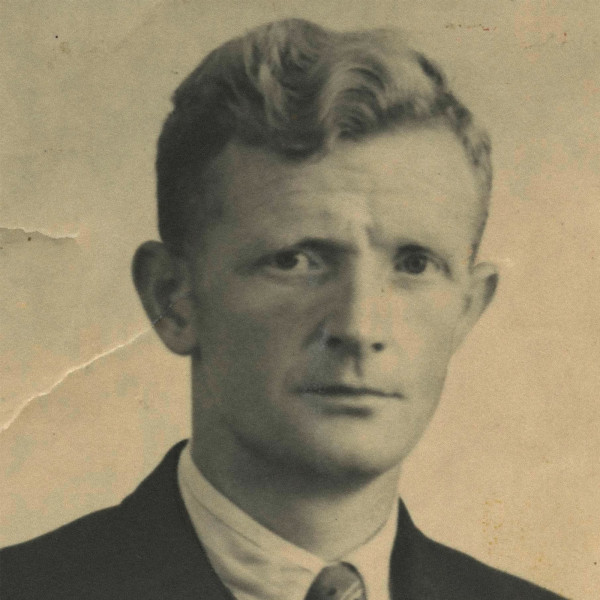
Johannes Post
1906-1944
Johannes Post was a leader in the armed underground in the Netherlands. The strictly religious farmer from the Drenthe province also organised places for Jews to hide in and around his village. Johannes Post was captured and executed by the German occupiers in July 1944.
How did Ab and his brother Marco get to their hiding place?
Mr Appenzeller, the accountant of the company founded by Jo Reiner, first accompanied Marco and later Ab to the hiding place. To reach the northeast of the Netherlands, they had to take a tram and a train, both of which were forbidden to Jews.
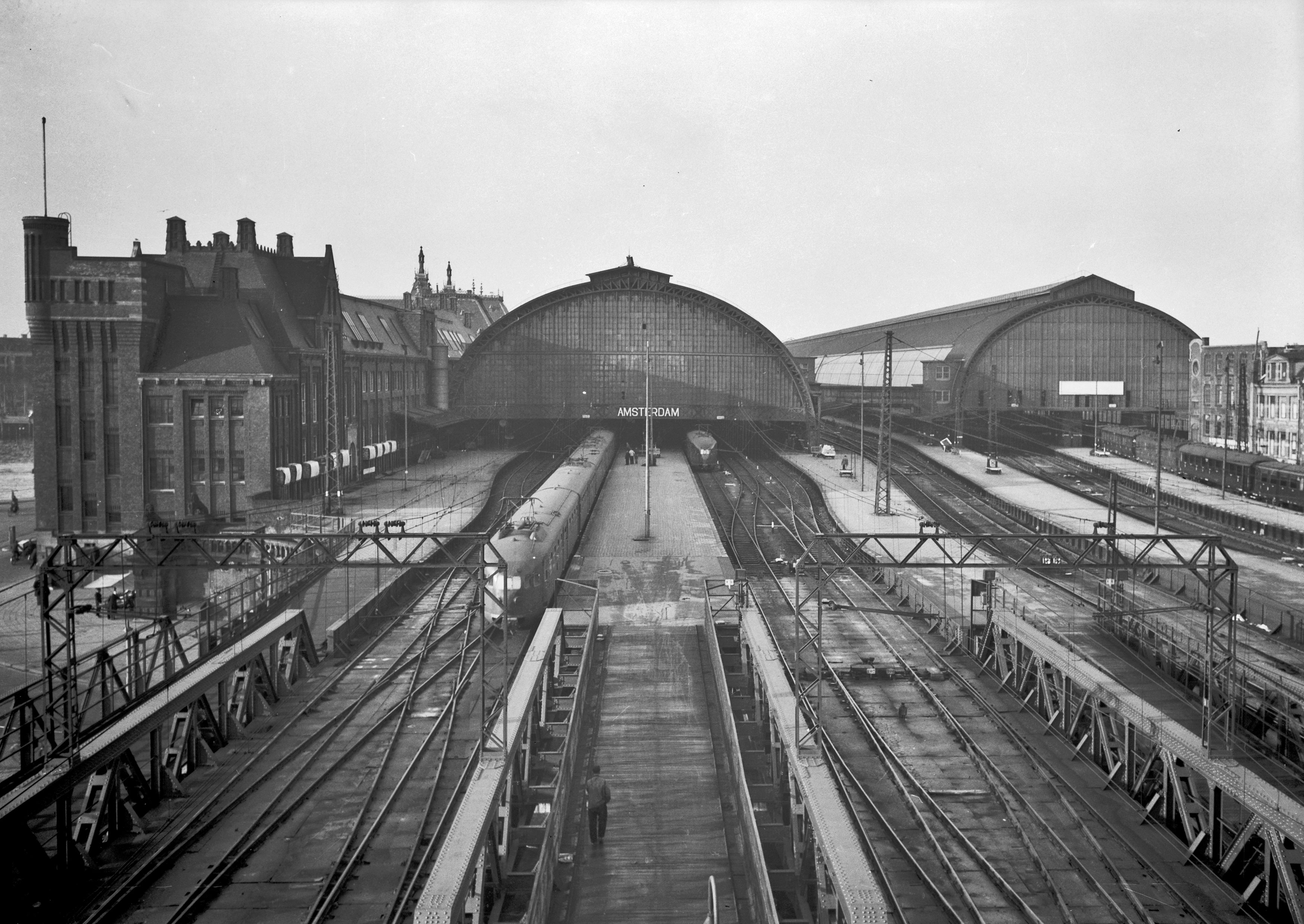
“At six o’clock in the morning, Mr Appenzeller came to pick me up.” Weiter
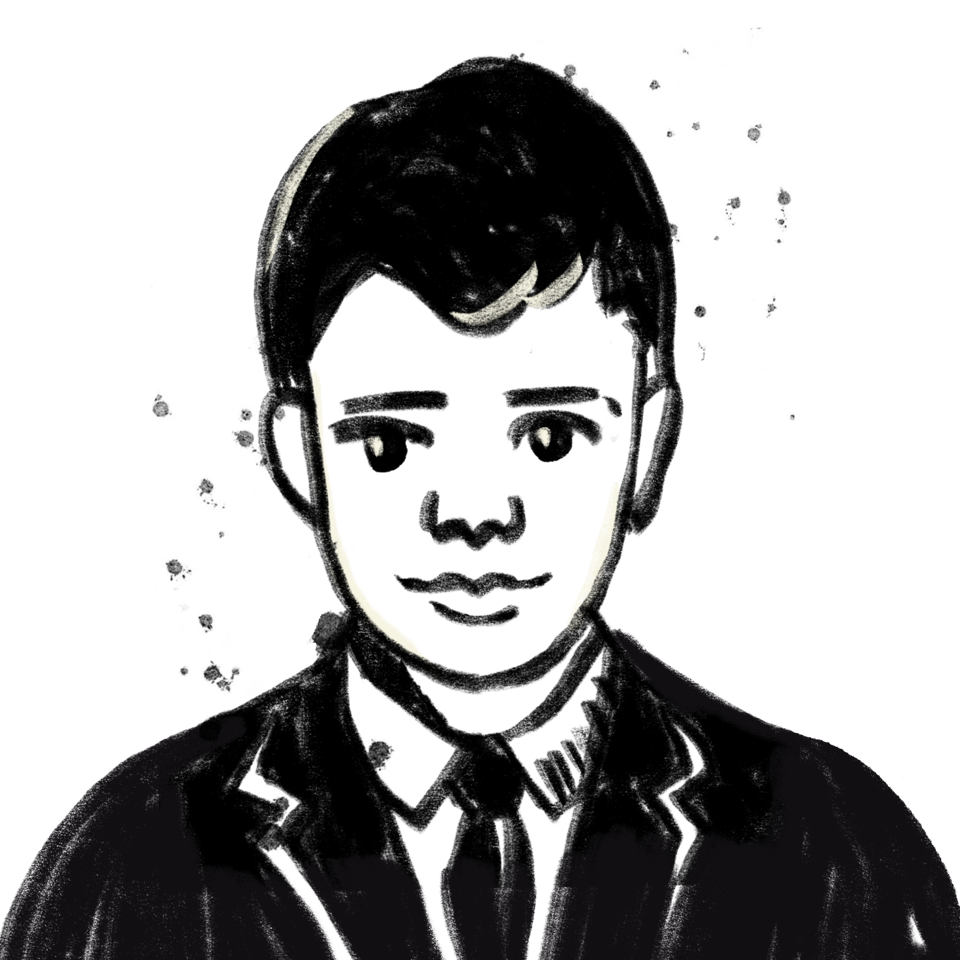
I was dressed like a country boy so that I would not stand out. I met Mr Appenzeller and he said, “This is your ticket to Hoogeveen. I must remind you that you are travelling as if you were alone.” It was a very difficult task. I realized that there would be no second chance. I couldn’t screw up.
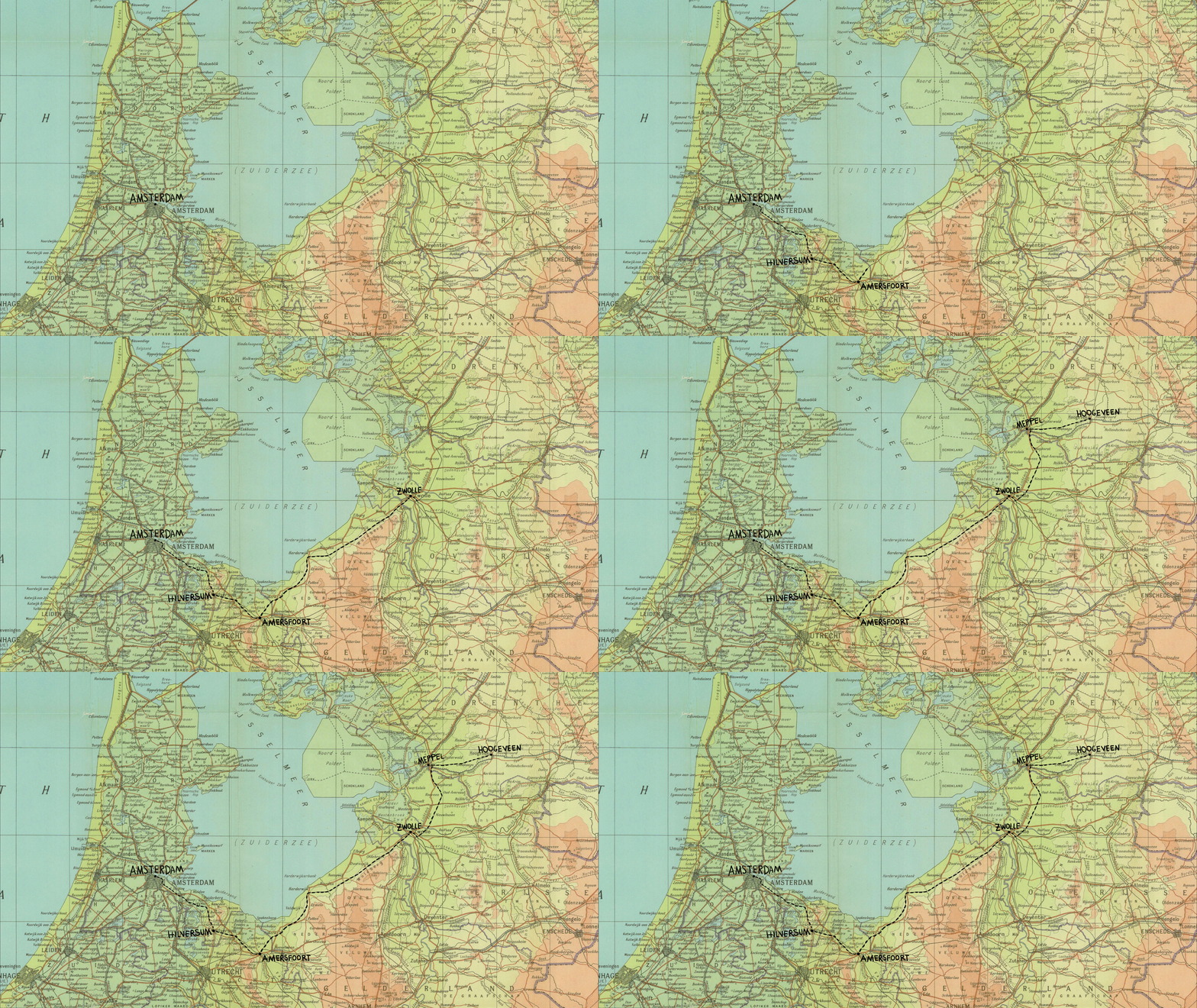
© Collins Bartholomew Ltd.
“I sat on the train, my black hair burning on my head while thoughts were swirling in it.” Weiter
Mr Appenzeller sat across from me. The journey took two hours, but it felt like an eternity. The landscape changed; I saw small houses and fields.
A group of Nazis sat next to us, speaking in loud voices, their uniforms crisp and menacing. Before the conductor arrived, we heard him announce in German that identification documents should be presented. It scared me a lot. When the conductor opened the compartment door, the Nazi group of four soldiers shouted, “Heil Hitler,” and he responded to them with a wave of his hand and closed the compartment door without checking.
I felt that I had been saved by a miracle.
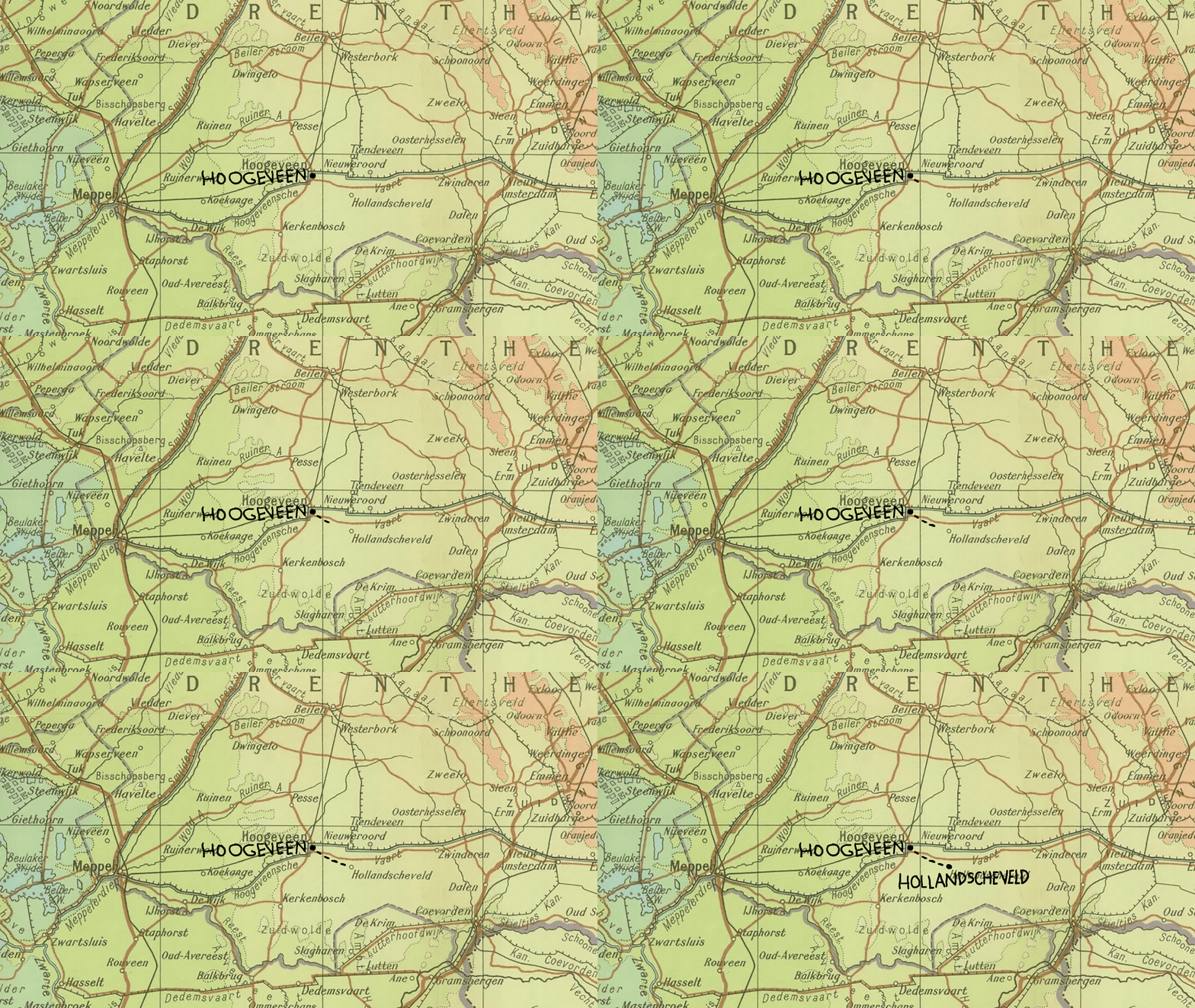
© Collins Bartholomew Ltd.
“We arrived in Hoogeveen. When I got off the train, I thought I had reached the end of the world.” Weiter
Mr Appenzeller disappeared, and then a farmer with a horse and a cart appeared. He helped me onto the cart. I don’t know how long we had been travelling when suddenly, we stopped, and the man said, “Step off!”. I got off, and stood alone on the dirt road holding the bag my mother had prepared for me. The horse and cart moved away. A young woman approached me and took me to one of the farmhouses. The farms were modest and stood close together.
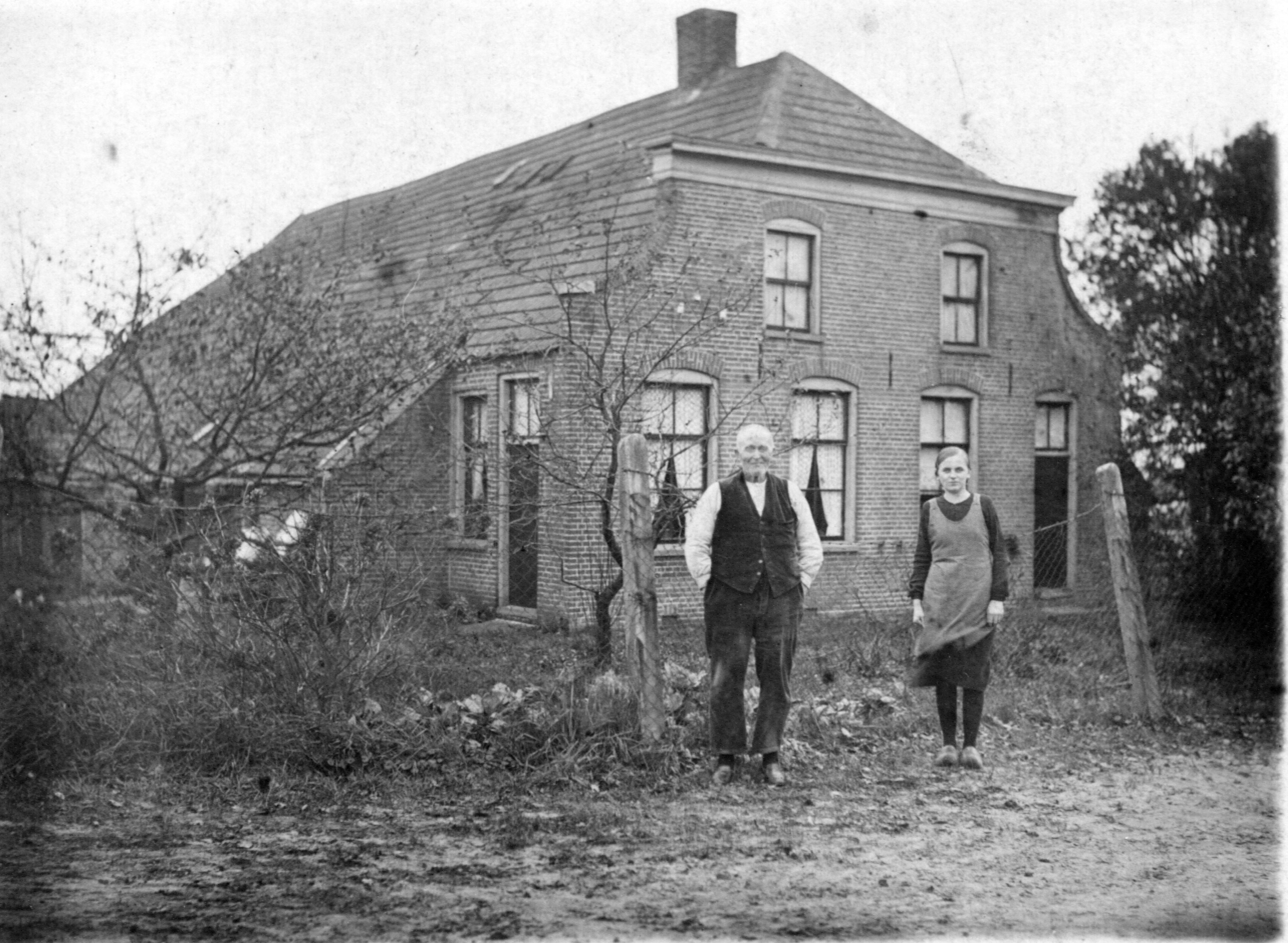
© Private property of the van der Helm family
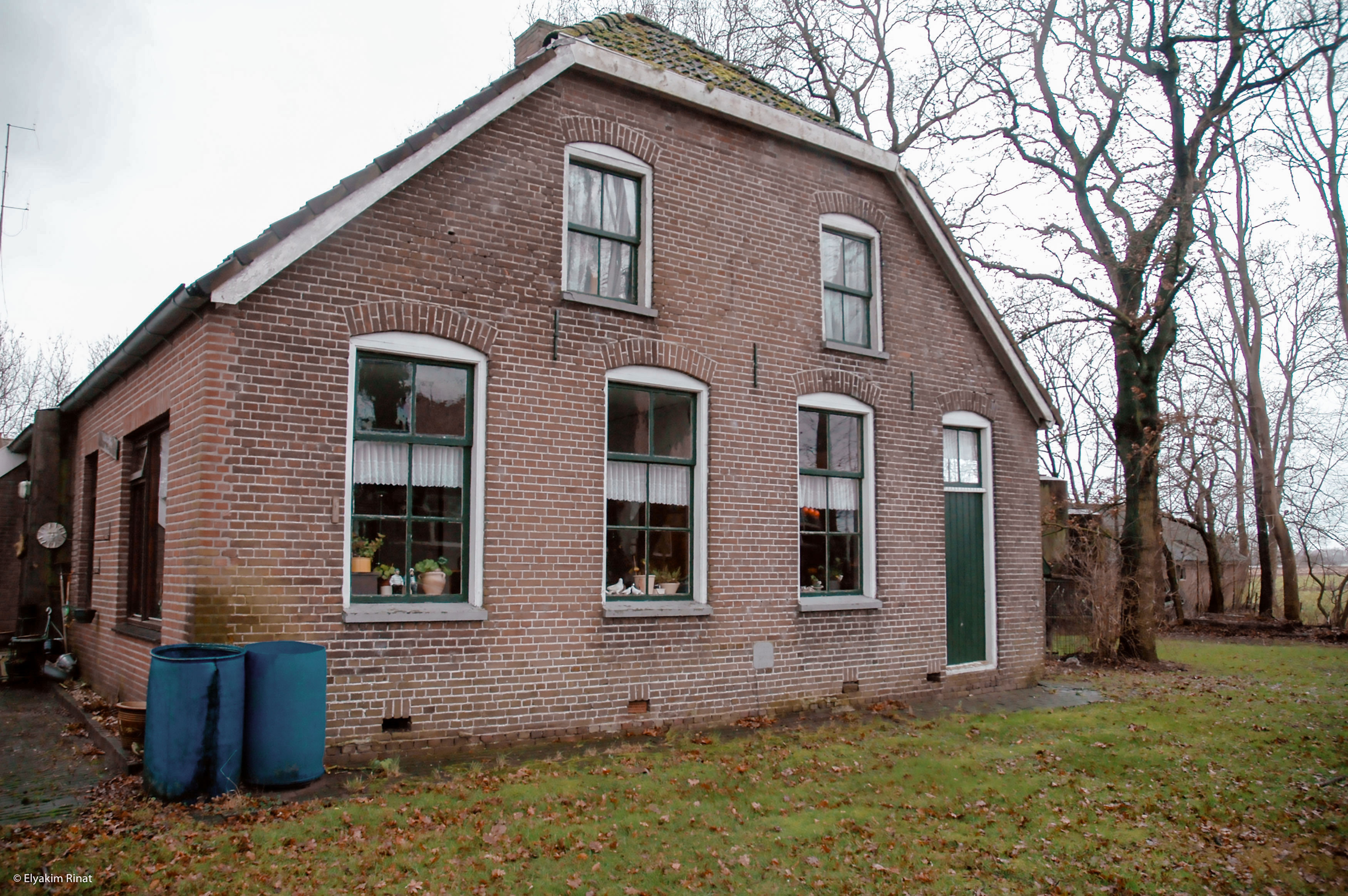
This photo was taken before 1940. Jo van der Helm’s grandfather, Jan Wolter Post, is standing in front of the house with Trijntje Moes, who also belongs to Jo’s family.
In 1943, the Reiner family hid in the room behind the two windows on the left.
“Marco was waiting for me inside the house. I was so happy to see him.” Weiter
Marco, who had been at the place for some time, felt at home and gave me a tour. A short tour since the house was small and modest. There were two rooms: the “woonkamer”, which was used as a living room, and a bedroom for Jan, Jo and the children, where they also cooked; and the “mooie kamer” (“beautiful room”) that was made available to us. In every country house in the Netherlands, it was customary to have a mooie kamer, a kind of living room where visitors were received. Jan and Jo’s mooie kamer was simply another room, smaller than the room in which the family lived. It had two built-in double beds.
Why did Jo and Jan help the Reiner family?
Jo and Jan van der Helm’s compassion motivated them to help the strangers who were being persecuted by the German occupiers and Dutch National Socialists. They welcomed them into their home and family.
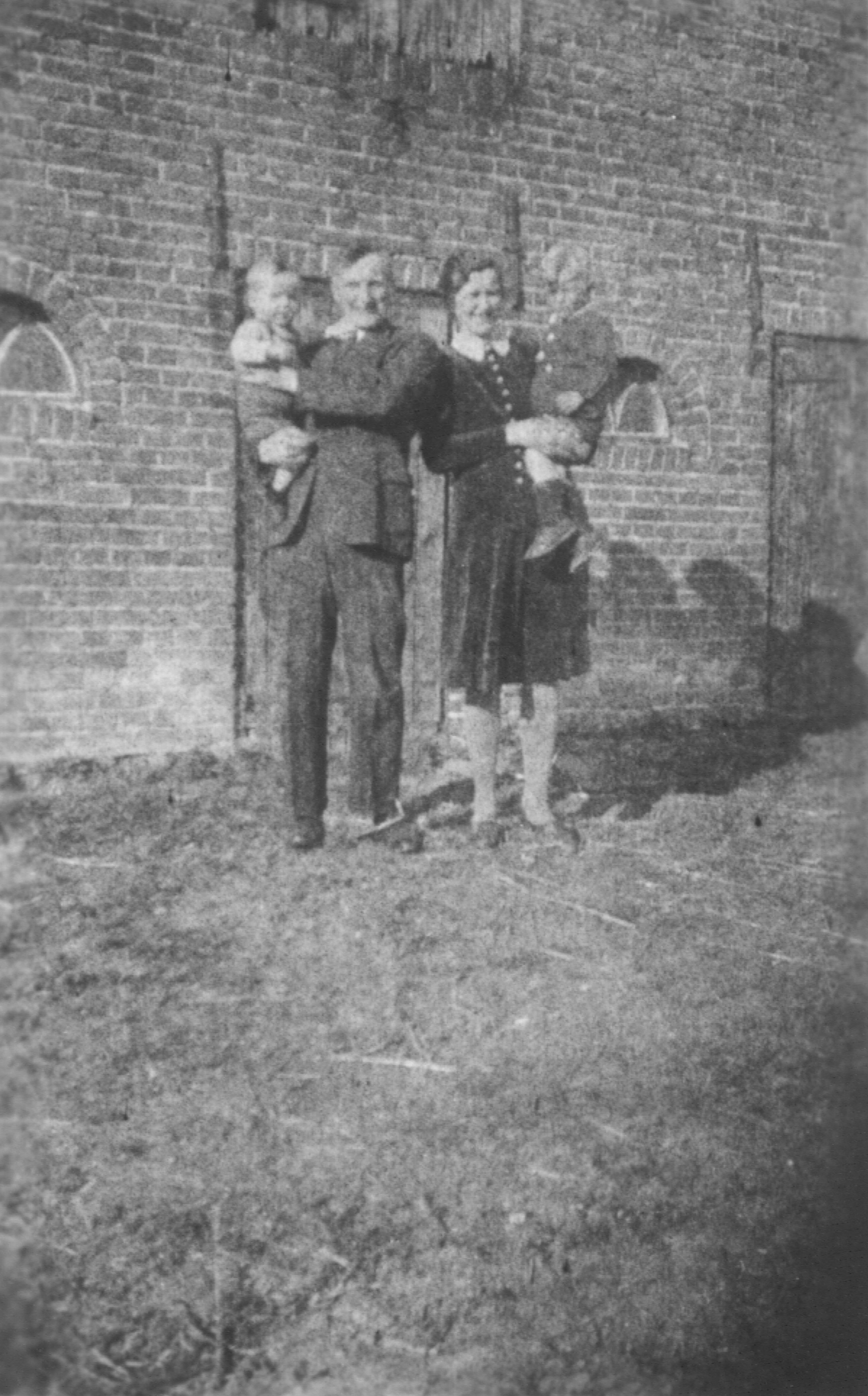
© Private property of the van der Helm family
“Jo prepared three meals a day for us, just like we had at home.” Weiter
In the morning, we ate porridge, at lunch, potatoes with some vegetables that Jo grew in a garden near the house, with pork or chicken, and in the evening, we ate bread with jam. After dinner, I learned to close my eyes like everyone else and listen. Jan read “Our Father” and the family prayed without moving their lips. After the silent prayer, he read stories, some from the Old Testament, and we all sat quietly and listened. The new routine was monotonous. Meal. Prayer. Work. Meal. Prayer. Work. Meal. Prayer. I was not excited about the menu. The same meals every day. But I loved working in the field and occasionally taking care of the blind pig.
Jo and Jan’s friendliness and understanding were remarkable.
Did the Reiner family have to stay in hiding day and night?
In the beginning, Ab and Marco took walks through the village and worked in the fields. But that changed when their parents joined them in hiding. Their father, Jo Reiner, felt that the risk of their being discovered was too great, so they stayed in the house during the day.
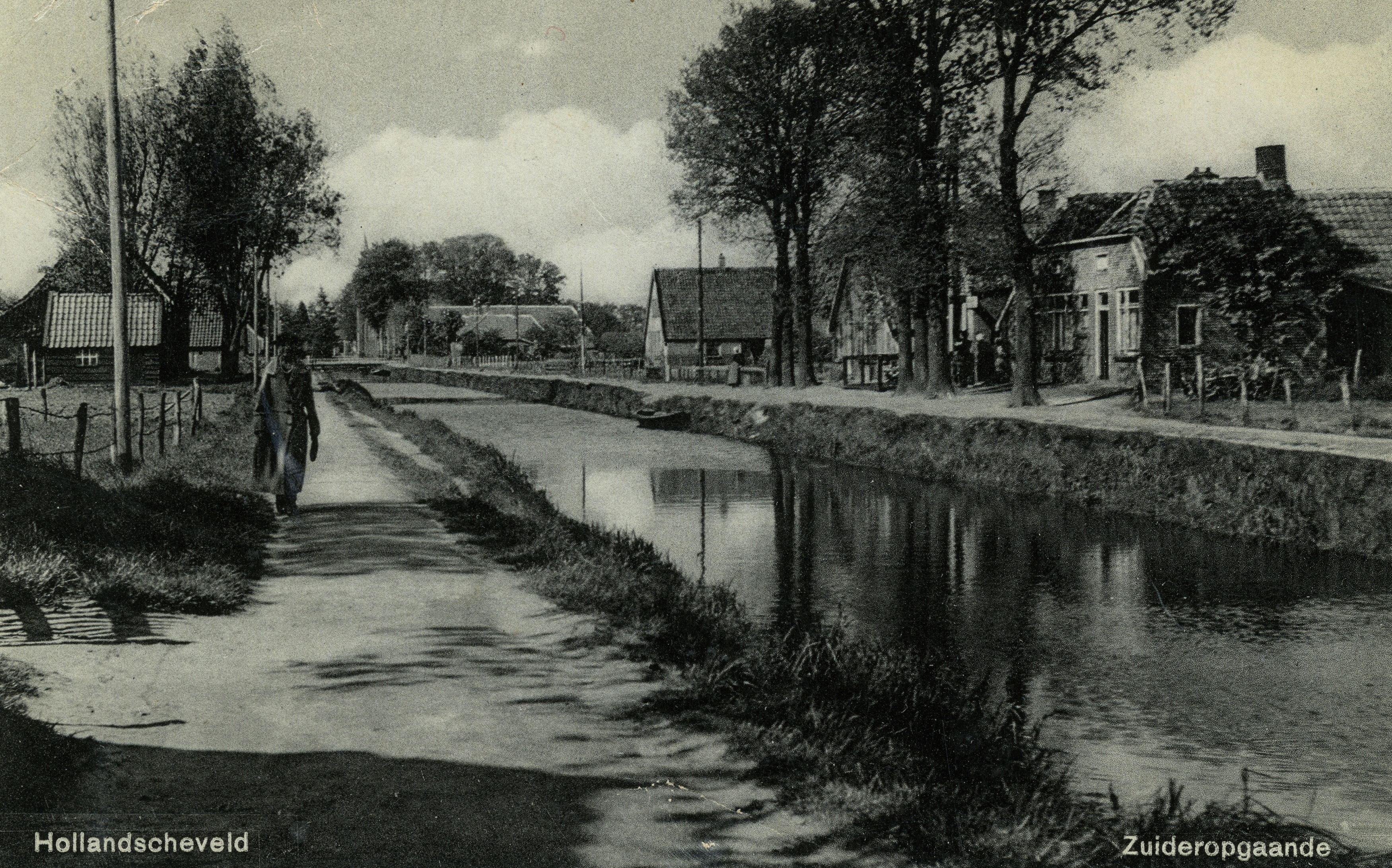
© Drents Archief, Collectie Kroezen, No. DA147022
In the 1940s, ditches and canals crisscrossed through Hollandscheveld and its surrounding areas. Waterways were the main routes of transport. This postcard from the 1930s/40s shows the Zuideropgaande, where Jo and Jan van der Helm’s farmhouse was located.
“We hid in the house with Father and Mother. We had no contact with the outside world, nor with anyone from our family and circle of friends.” Weiter
We could only go out when it was dark. We wore the wooden clogs villagers wore and walked a little around the house, in an area of only a few square meters. When it was dark we could chop the logs that were lying near the house and prepare them for burning. But in daylight, we were always inside, inside the room. When we were inside we could talk in a normal voice, but there was nothing to talk about; nothing happened.
Did the Reiner family take any other precautions?
Their father, Jo Reiner, had immigrated to the Netherlands in the 1920s. Neither parent had Dutch citizenship. To conceal his Jewish Krakow origins, Jo Reiner had a fake identity card issued to the name “Jan van Velzen”.
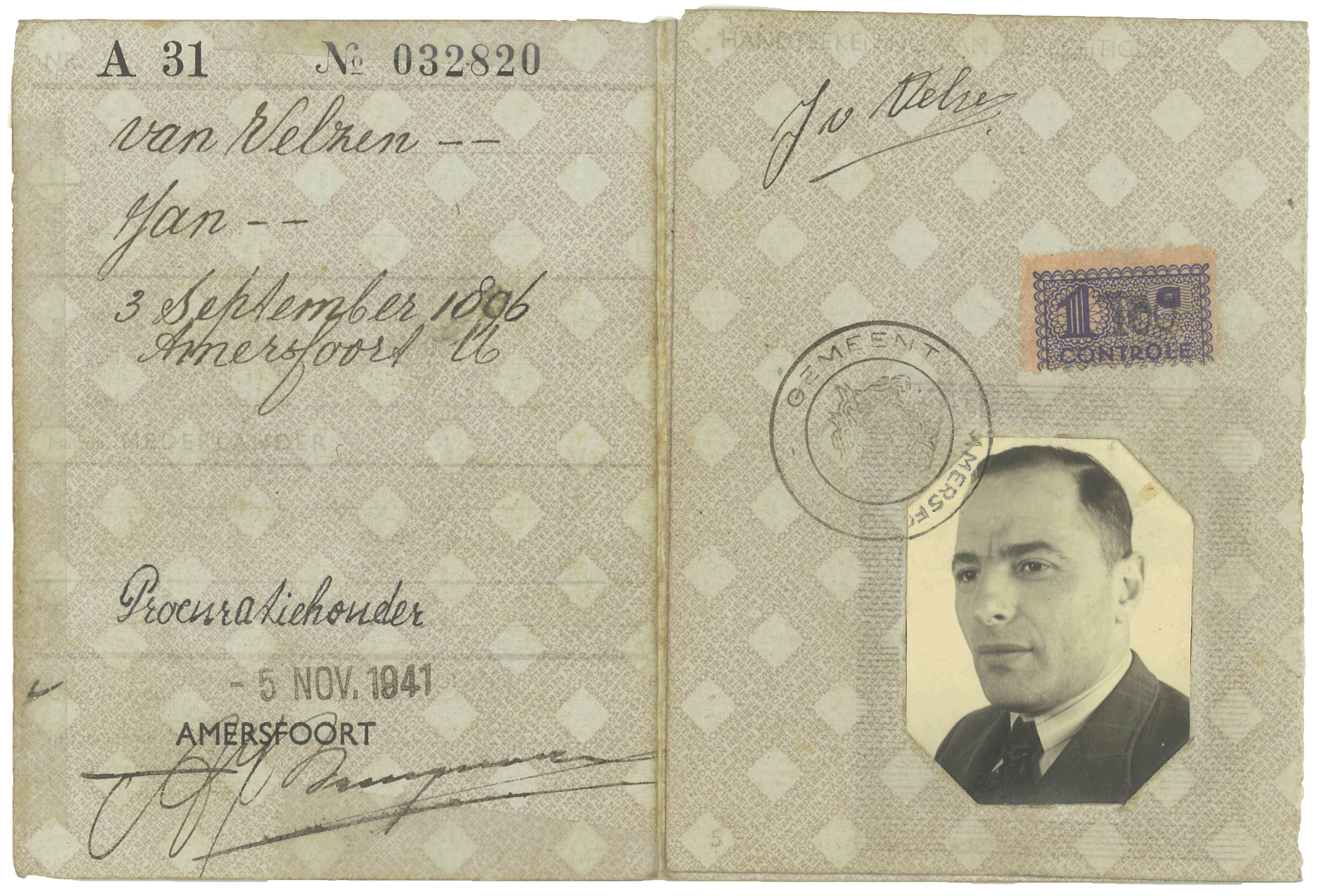
© Private property of the Rinat family
Transcription
[Stamp] Municipality of Amersfoort
[passport photograph] Jo Reiner, 1943
“Father’s fake ID illustrates the loss of identity that accompanied going into hiding.”
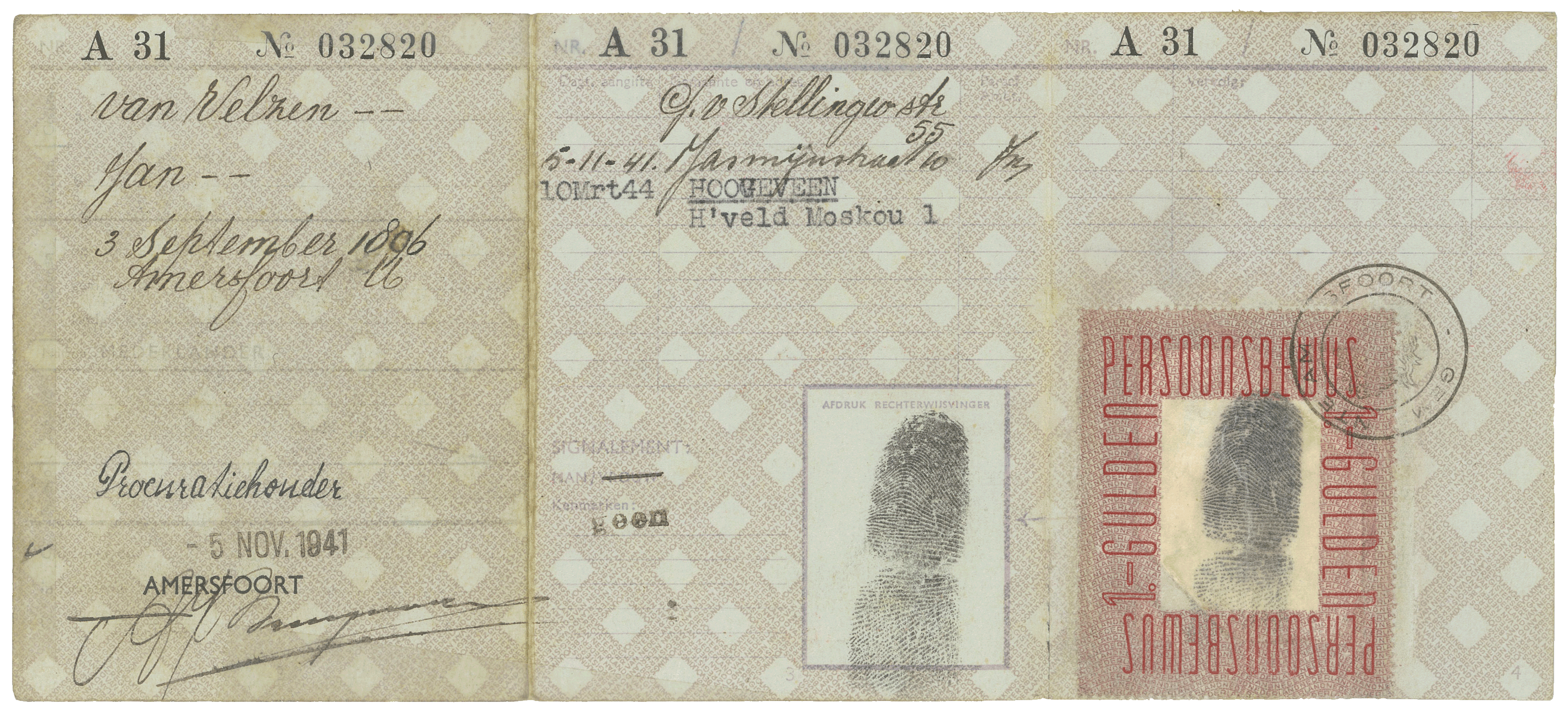
© Private property of the Rinat family
Transcription
[surname] van Velzen - -
[name] Jan - -
[date of birth] 3 September 1896
[place of birth] Amersfoort 16
[profession] authorized representative
[date] 5 Nov[ember] 1941
[location] Amersfoort
[illegible signature]
A 31 N° 032820
[address] G v Stellingevstr[aat] 55
[address] 5.11.41 Jasmijnstraat 10
[address] 10 March 44 Hoogeveen
H’[ollandsche]veld Moskou 1
Description: man
Characteristics: none
Imprint of the right index finger
A 31 N° 032820
[stamp] municipality of Amersfoort
[sticker]
Identity card
1 guilder
Identity card
1 guilder
The Dutch resistance movement not only found hiding places for Jews; it also arranged for them to receive forged papers, food stamps and ration cards for other limited goods.
Who suddenly appeared at Jo and Jan van der Helm’s home in summer 1944?
Ab’s cousin Sol Kimel joined the Reiner family in hiding. Sol had gone into hiding on the farm of Jo van der Helm’s parents and siblings, whose last name was Moes, in early 1943. The Moes family pretended he was a boy from Rotterdam who had been bombed out of his home.
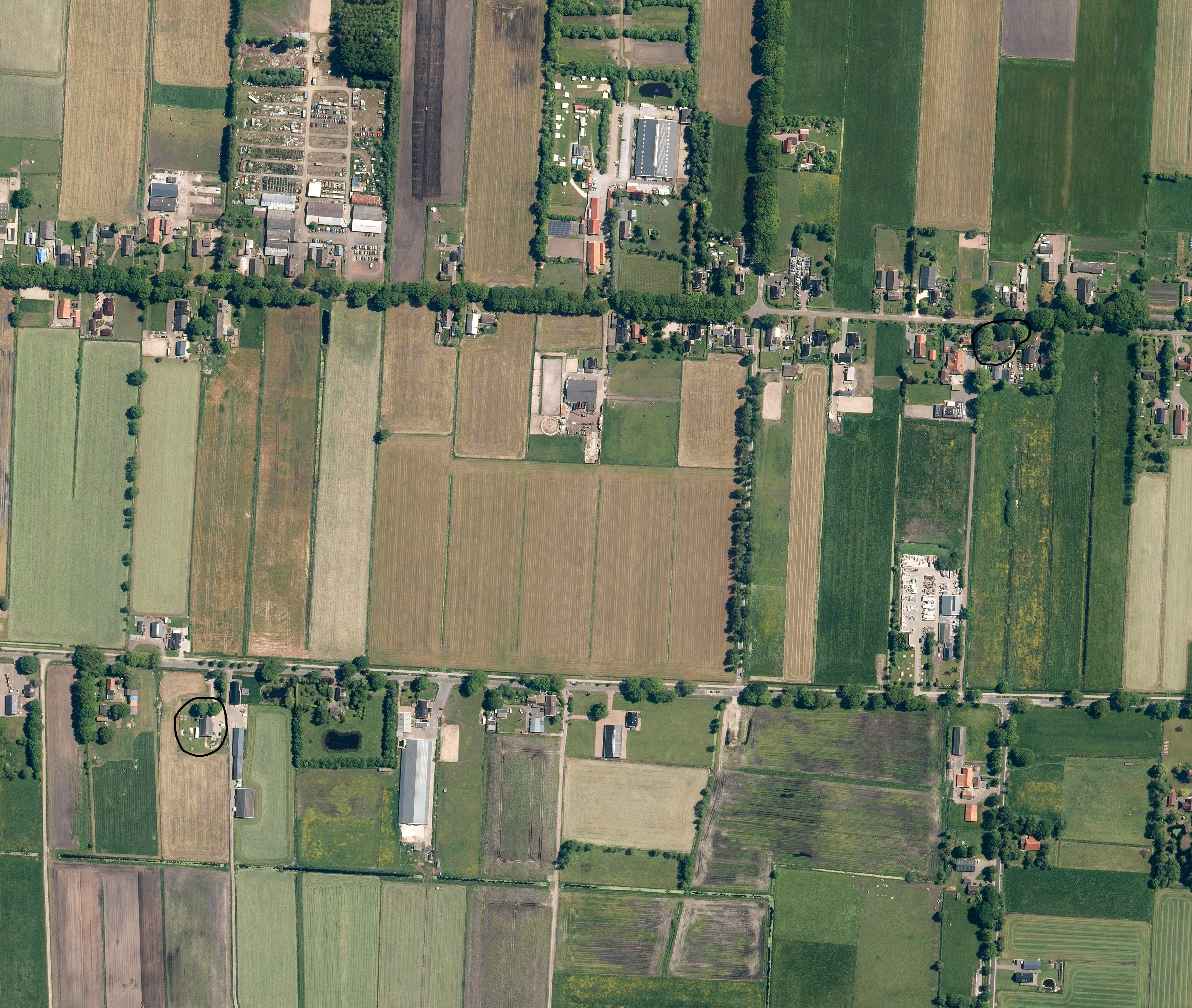
The Moes family’s farm lay on the Riegshoogtendijk and the house of the van der Helm family on the Zuideropgaande. They were only a kilometre apart.
“Sol stood in the doorway, was quickly ushered into our room, and the door was closed behind him.” Weiter
We had been in hiding for almost a year, disconnected from the outside world. It had been a year and five months since we’d last seen him. We sat with him, trying to figure out where he had been and what he was going through. It’s hard to say whether we felt more surprised or happy.
Our surprise intensified as he recounted what he had experienced since he left our flat. How he took the same route as us, got off at the same train station, and moved into one of the farms next to us with Jo’s parents, the Moes family.
Sol told us: “Though the farm was small, everybody was always working. They treated me like one of their own sons. Eventually, I had to leave the farm because some pro-Nazi neighbours started gossiping about how strange it was that I never left the farm except to go to church and that no one ever came to visit me.”
Thus, his farming experience ended.
What did the family members do to ward off their boredom?
The idleness and lack of distraction nearly drove them crazy. They were grateful for any task and helped with the housework as much as they could. Mother Lou looked after Jo and Jan’s small children.
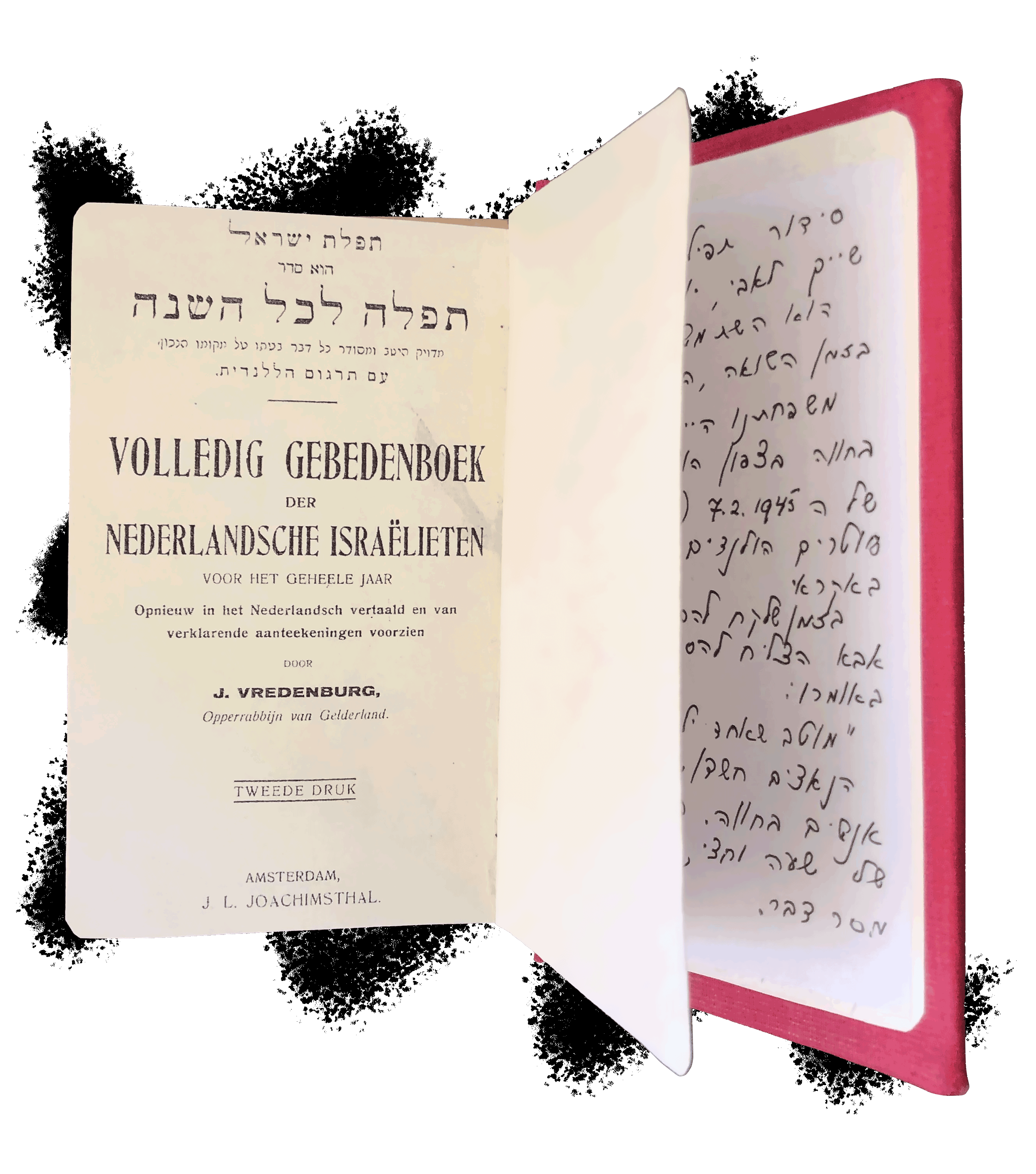
© Private property of the Rinat family
Transcription
Translated into Dutch and annotated by J. Vredenburg, Chief Rabbi of Gelderland.
Second Edition
Amsterdam, J. L. Joachimsthal.
“I remember Father busy mending his little Sidur, the prayer book.” Weiter
It was the book he used every day, the habit he adopted for himself during the hiding period. I suppose these pursuits were a source of comfort and brought order to the rhythm of his daily life. After the war, someone found the Sidur on the farm and gave it to Jo van der Helm, who gave it to us. Since then, I have kept it with me, and I use it every year at Father’s “Yahrzeit”, the anniversary of his death.
“One morning we received a valuable gift of two textbooks: ‘Teach Yourself English’ and a book on basic geometry.” Weiter
There was a school next door, and the teacher we were watching from the window had probably seen us too. He gave Jan the books to give us. We returned to independent learning like at the Montessori school. The German we had learned in school was enough for us to read the basic geometry book over and over again. The thought that a neighbour knows about us, understands our hearts, and also gives us gifts was joyful and gave us hope. There are good neighbours, there are good people, there is a chance it will be okay and that we will get out of here and return to normal life.
How did the Reiner family cover their expenses while in hiding?
Mr Appenzeller visited from Amsterdam every three to four months and brought cash, which he gave to Jo and Jan van der Helm. He reported on the war developments and described the situation in Amsterdam and the Netherlands.
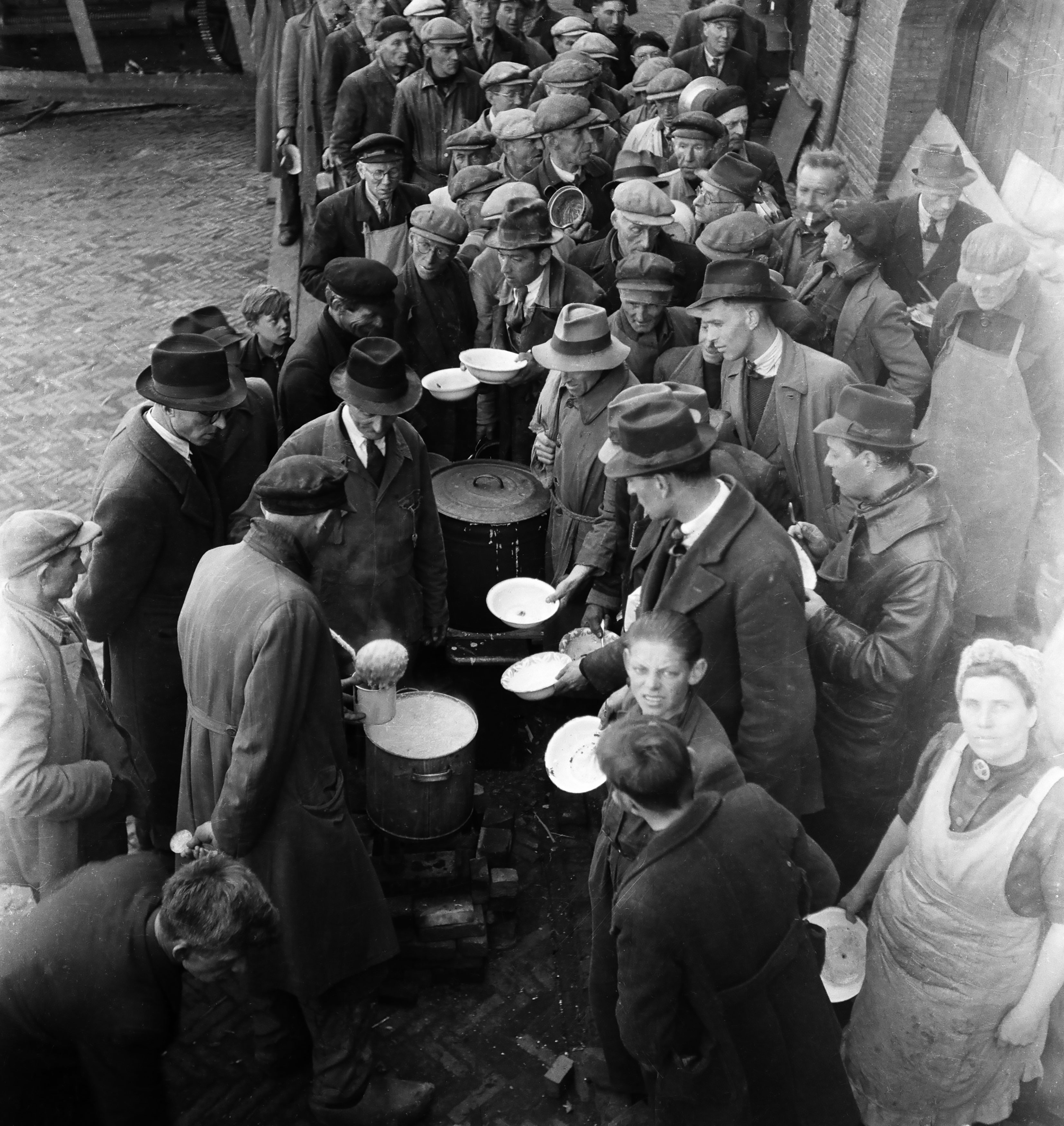
© Ad Windig / Maria Austria Instituut
After landing in Normandy, the Allied troops swiftly moved towards Germany, liberating the southern Netherlands in the process. The rest of the country remained under German occupation. In autumn 1944, the most crucial goods became scarce. When the Dutch government-in-exile called for a railway workers’ strike to support the Allied troops, the German occupiers responded with reprisals: they cut off supplies to the densely populated western part of the Netherlands. The food and coal crisis in the so-called Hunger Winter claimed at least 15,000 lives in the first months of 1945. According to some estimates, as many as 25,000 people died. The north and east of the country were not liberated until April 1945. The western region was freed when Germany surrendered.
“Mr Appenzeller continued to arrive in the bitter cold and bring payment for our living expenses from a cashbox that Father had wisely prepared in advance.” Weiter
He told them that there is no food in Amsterdam, that hunger was severe, and that people were calling this winter the “Hongerwinter” (the Hunger Winter). To keep warm, the residents dismantled everything made of wood from the empty houses of the Jews. People would come from the city to the villages and offer valuables, jewellery, or gold coins in exchange for food there. Oddly enough, our situation was better than that of the city dwellers. We were warm and always had something to eat, even if it was mostly porridge.
One evening Father discovered larvae in the porridge. It led to a real conflict, probably the only conflict we had with the hosts during the twenty months we were there. Father refused to eat the porridge with the larvae. It was disgusting, and we wanted to cook a new stew. Jo simply said “Eat!” We all refused. And she kept saying, “Eat,” this time angrily. “If you were in the camp you would eat it.” Until that moment, the camp had only been a vague place to me, and we hoped that if we did not talk about it, we would not have to go there. The subject of the camp had never come up in our conversations, especially not with the hosts. And suddenly ... no one said much. We took the larvae out of the porridge and ate.
How did the growing risk of being discovered manifest itself?
One night in December 1944, members of the Dutch Landwacht knocked on the front door. The men were not looking for the Reiner family; they wanted Jan van der Helm’s help with something, but the incident left Jo and Jan van der Helm deeply agitated.
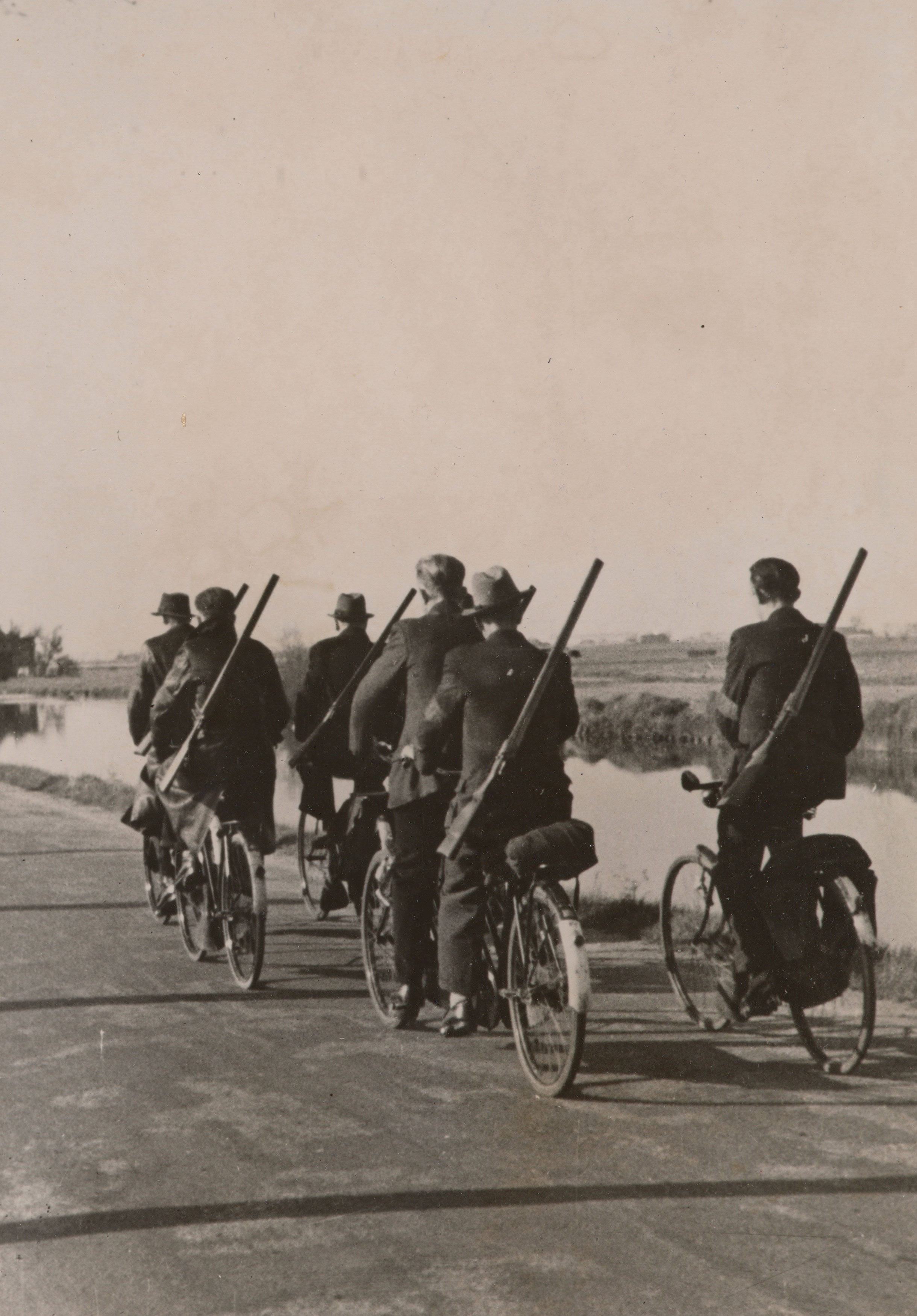
© Orbis / NIOD, Beeldbank WO2, No. 78575
The Nederlandse Landwacht was established in November 1943 by the German occupiers in collaboration with the Dutch National Socialists. The paramilitary organisation, which served as an auxiliary police force, consisted of volunteers, most of whom were members of the NSB, the Nazi movement in the Netherlands. Its members guarded buildings, and also carried out identity checks, arrests and house searches. The Landwacht was despised by the civilian population and had violent confrontations with the armed resistance.
This photo was taken on 21 June 1944 in the Veluwe. A German propaganda text was attached to the back:
“The Dutch Landwacht. After finishing their work, sacrificing their few hours of free time and often their sleep, these men drive along the country roads and paths. In this way, they protect the country and the property of the soldiers fighting at the front from unpleasant surprises. Anyone they encounter who cannot provide sufficient identification is taken to the nearest police station.”
“From that night on, we three boys slept in the straw hideout.” Weiter
Jo asked us to move to a corner in the courtyard where the straw bales were piled up, which we happily did. It was even a joy for us. Father and Mother stayed in the beautiful room, and we, the three teenagers, were given a separate housing unit. Despite the extreme cold outside, the good insulation provided by the straw bales offered us a warm place to sleep. Given the circumstances, it was a very decent hiding place.
The radio was also hidden in the pile of straw bales, a grave violation of Nazi law, even for non-Jews. Once a week we were given permission to turn on the device. We would prick up our ears and pass on the news we heard to everyone. We knew about the Allied forces fighting the Germans. We heard about the invasion of Normandy and the upheaval in the war. Some places had already been liberated from German occupation. The tension increased day by day. At night we heard hundreds of planes from England passing through the skies of the small village on their way to Berlin.
© Private property of the Rinat family
“One morning a rumour spread that the Germans were raiding houses.” Weiter
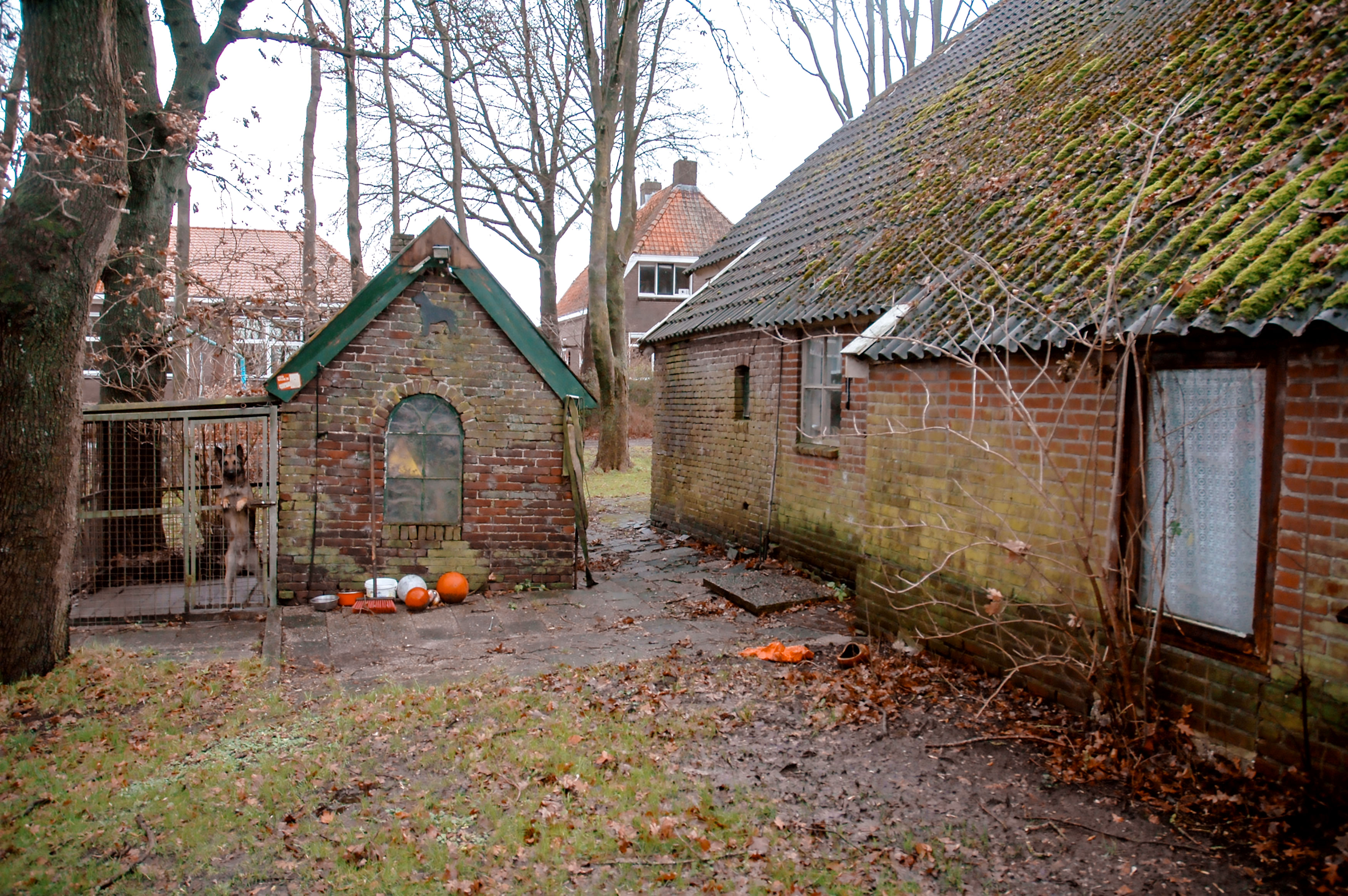
I remember Jo briskly lifted a plank up from the bottom of the closet in our room, below which stairs led to a small cellar, a very wide and very low underground hideout, about a meter high, completely dark. We lay there for five hours, barely breathing, listening to every noise outside. Time passed slowly and it felt like an eternity, until Jo lifted up the board again and brought us back to the beautiful room.
Who discovered the Reiner family?
When Jo and Jan van der Helm were away from the house, Nazis patrolling the village discovered the family in hiding. They murdered the father, Jo Reiner, because he refused to betray his family. Ab and the others were hiding in the cellar.
© Private property of the Rinat family
“The Nazis started beating him. They wanted him to give them information about other people in the house, the landlord and us.” Weiter
Father kept silent and they did not relent. We lay motionless right below him and heard him being interrogated and tortured. They asked if more Jews were hiding in the house. Father stayed silent.
We heard a punch and another punch. Time seemed to stand still. His every breath lasting an eternity. We heard him breathing heavily, shaking, suffering ...
We did nothing ... we could not do anything.
Then – a single shot that said it all.
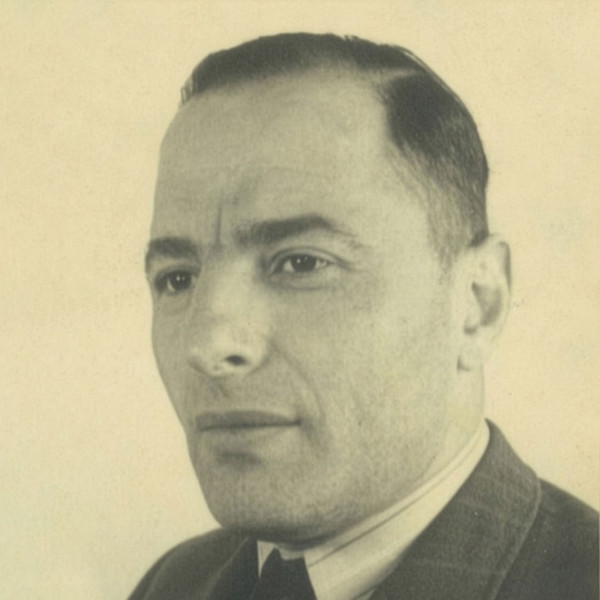
Jo Reiner
1906-1945
“They found our hideout easily .... they fired inside and shouted that we had to surrender.” Weiter
I no longer cared about anything. I realized that Father had sacrificed himself for us and I could not bear the pain of my loss. There was no way to resist. We went up the stairs. There were three SS men. One of them gave us the command: “Hands over your head.” We put our hands over our heads.
He approached Mother and said to her, “Mother, I gave your husband a coup de grace.” Mother kept her lips pursed. Expressionless.
I told my mother that I was feeling dizzy, and then I fainted ... It turned out that I had been hit by a bullet in my leg, but had not noticed it.
What happened after their arrest?
The Nazis searched the van der Helm family’s house and yard. Ab was brought to a German military hospital; the others were put in prison. Two days later, they were all taken to the Westerbork transit camp.
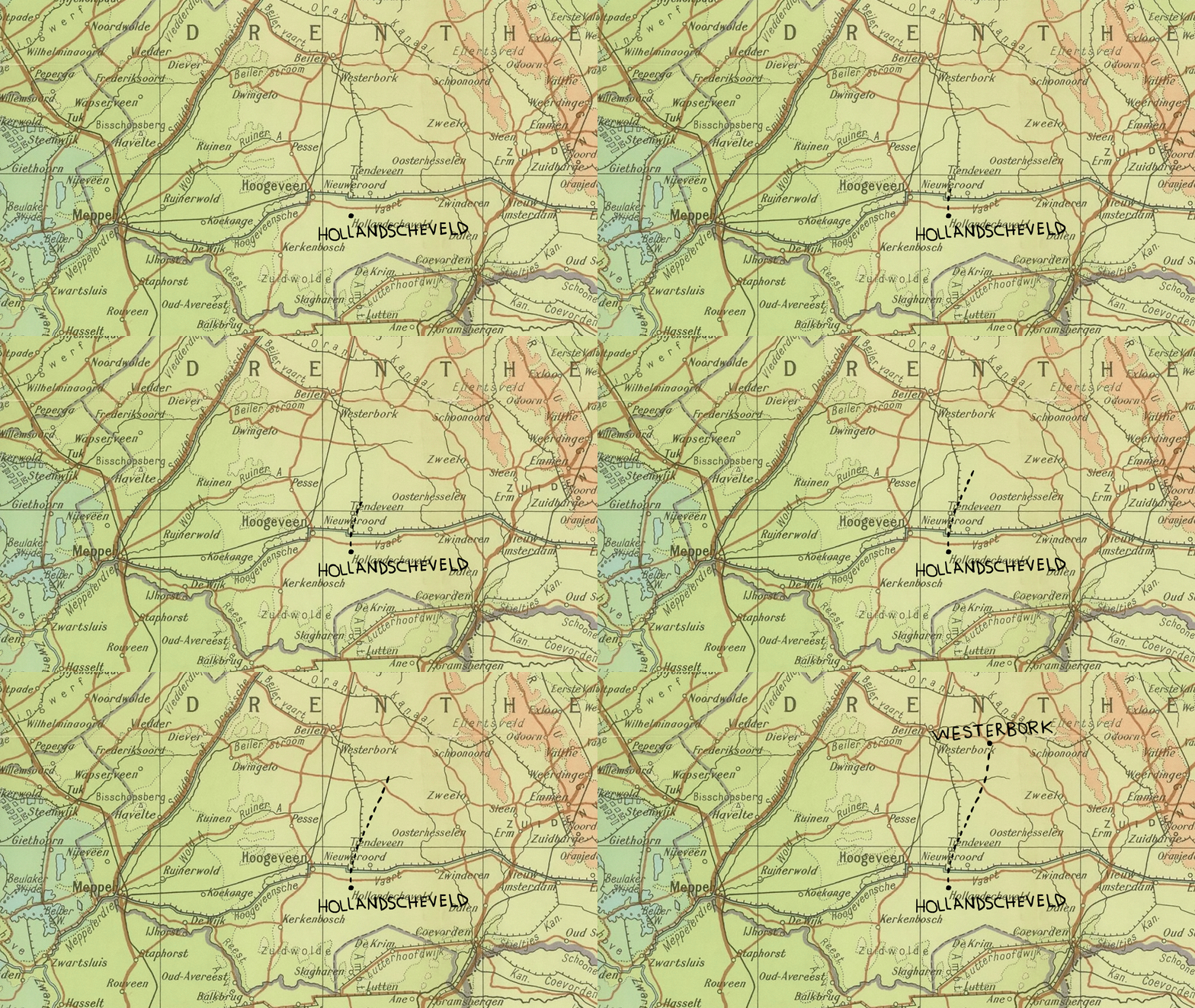
© Collins Bartholomew Ltd.
“We were loaded onto a peasant wagon.” Weiter
Before we set off, an SS officer arrived to interrogate Sol. The Nazis had found the straw hideout and the radio inside. The SS officer wanted to know what else was hidden there. Money for example. Although barely conscious, I could hear him being cruelly interrogated. The German almost strangled Sol. Luckily this time Mother was able to intervene before it was too late. Mother screamed and the German let go.
We set off, the cart shaking and pounding mercilessly and every jump caused me great pain. The cold was intense and there was a lot of snow.
What happened to Jo and Jan van der Helm?
The Nazis went to Jan van der Helm, who was working in the field. When they asked him who was in his house, Jan tried to run away. The Nazis chased after him and shot him. Jo van der Helm was left behind, a widow with two small children.
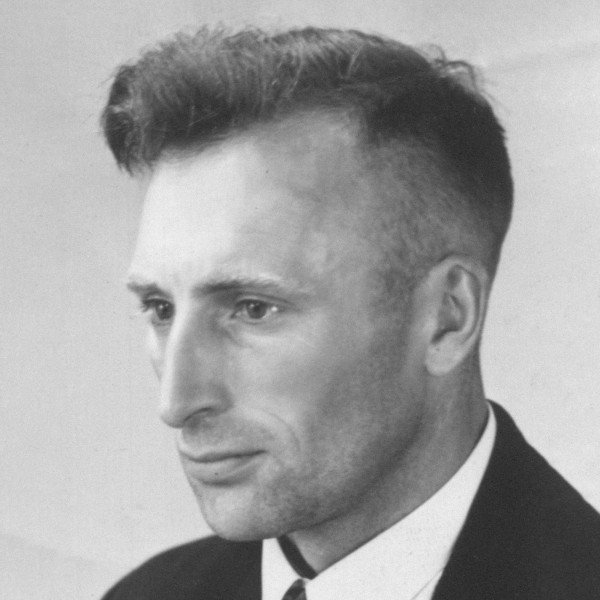
Jan van der Helm
1911-1945