




Arrest

In summer 1942, the German occupiers began arresting increasing numbers of Jews. They were told they were being sent to Germany to perform labour. At the time, however, rumours about the true destination of the transports were beginning to spread, which made the people in the Netherlands mistrustful. Sensing the danger, the Tal, Levenbach and Reiner families began seeking ways to protect themselves.
When did the deportations from the Netherlands to the extermination camps begin?
The first deportation transport left the Westerbork transit camp in the Netherlands on 15 July 1942. The train carried 1,135 Jewish men, women and children. Its final destination was the Auschwitz concentration and extermination camp.
© Collection Jewish Museum, Amsterdam, No. D002526
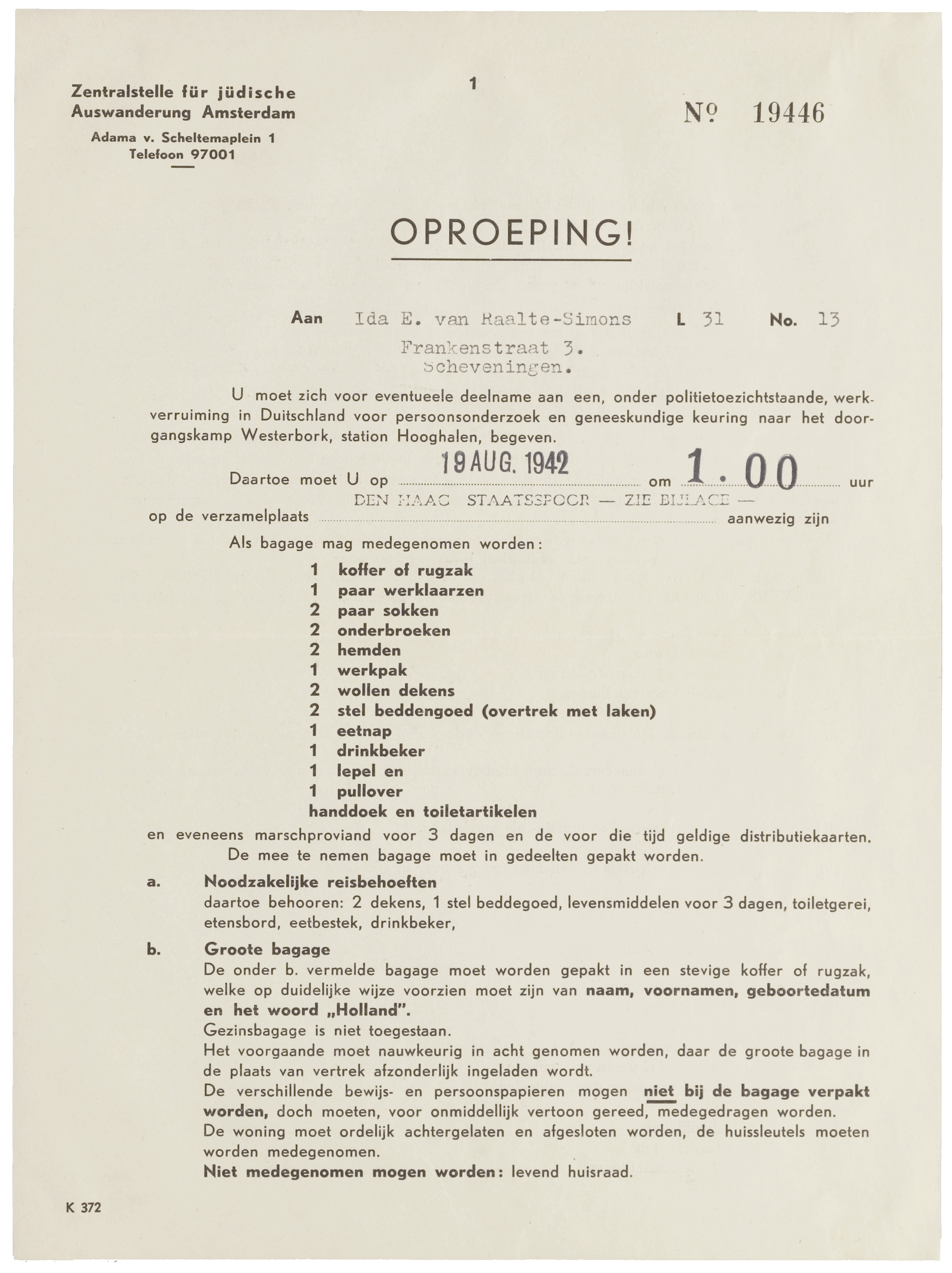
Transcription
Adema v. Scheltemaplein 1
Telefoon 97001
Summons!
Ida E. van Raalte-Simons L 31 No. 13
Frankenstraat 3.
Scheveningen.
You are requested to report to the transit camp at Westerbork, Hooghalen station, for personal screening and medical examination prior to possible participation in the work effort in Germany under police supervision. To this end, you are required to be present at the assembly point at The Hague Staatsspoor station (see appendix) at 1:00 o'clock on 19 August 1942.
You may take the following items with you as luggage:
1 suitcase or knapsack
1 pair of work boots
2 pairs of socks
2 pairs of underpants
2 shirts
1 work suit
2 woollen blankets
2 sets of bedding (duvet cover with sheet)
1 mess tin
1 drinking cup
1 spoon and
1 pullover
towel and toiletries
and provisions for 3 days and the ration cards valid for that period. The luggage to be taken must be packed in sections.
a. Necessary travel items
These include: 2 blankets, 1 set of bedding, food for 3 days, toiletries, food container, cutlery, drinking cup,
b. Large luggage
The luggage mentioned under b. must be packed in a sturdy suitcase or rucksack, which must be clearly marked with your surname, first names, date of birth and the word “Holland”.
Hand luggage is not permitted.
The above must be strictly observed, as large luggage will be loaded separately at the place of departure.
The various identity and personal documents may not be packed with the luggage, but must be carried with you, ready for immediate presentation.
The house must be left tidy and locked, and the house keys must be taken with you.
The following may not be taken with you: living household goods.
The ‘Central Office for Jewish Emigration’ was an institution set up by the German occupiers. It directed the Jewish Council to distribute the labour summonses.
The first summonses were delivered on 5 July 1942 and sent primarily to German and other non-Dutch Jews. Contrary to the claims of the German occupiers, the transports in the summer of 1942 did not go to labour camps in Germany; they went to the Auschwitz concentration and extermination camp.
Many Jews were suspicious of the summonses and only a few showed up at the assembly points. The German occupiers increased the pressure on the Jewish Council, but also resorted to other means: They carried out raids or arrested Jews in their homes in the evenings.
Ida Estella Mathilda van Raalte-Simons, born in The Hague in 1895, survived the Holocaust. She passed away in The Hague in 1987 at the age of 92.
“People began disappearing in summer 1942. Some received orders by mail to report to work in the East; others were rounded up on the street. Few managed to escape and hide.”

Who arrested the Levenbach family?
Annelie, her brother Joost, and her parents were on their way home when they were arrested by the Dutch police. The family had just disembarked from a ferry that had taken them across one of Amsterdam’s many canals.
© Collection Verzetsmuseum Amsterdam, Beeldbank WO2, No. 111325
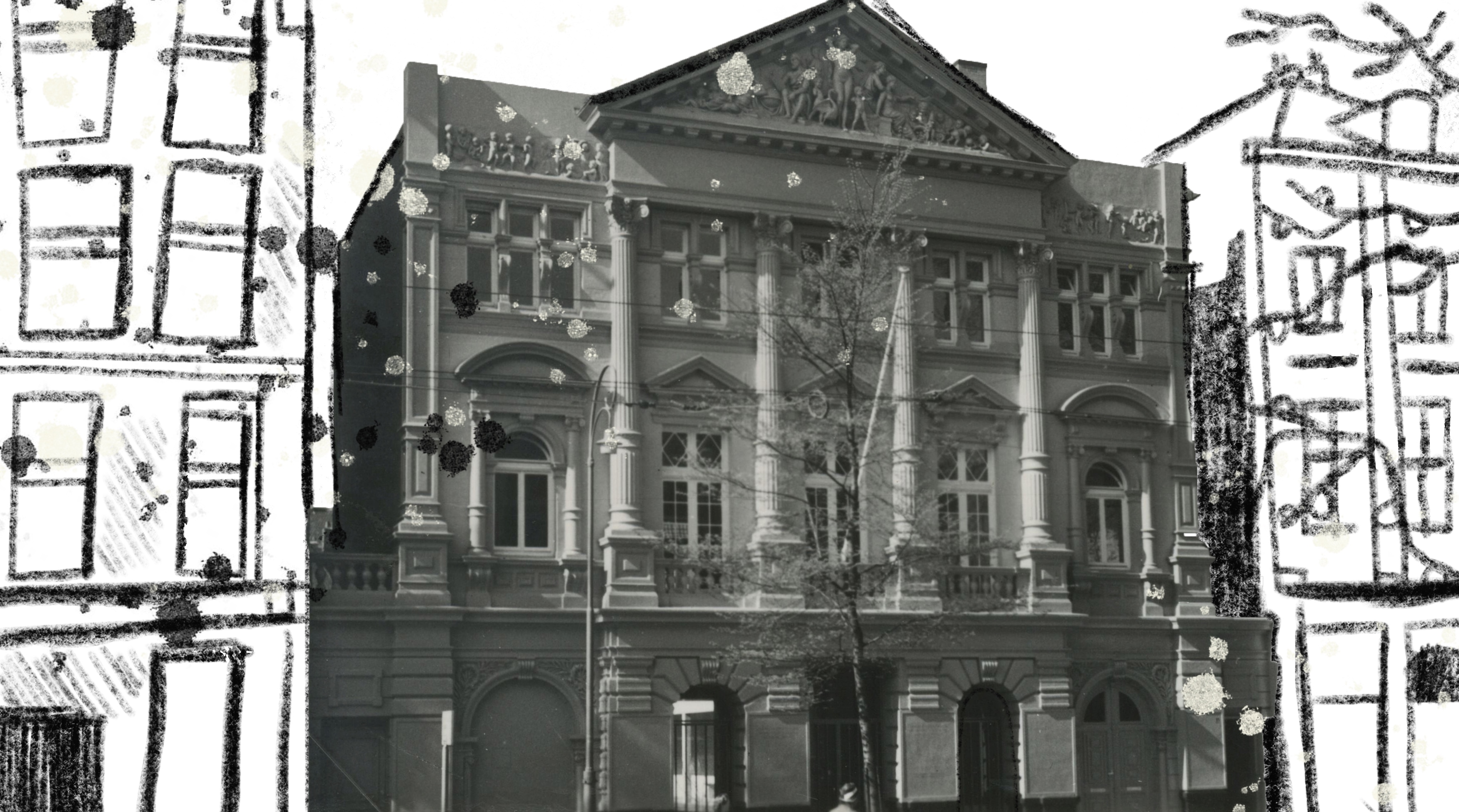
The Hollandsche Schouwburg was a theatre building in Amsterdam that the Nazis began using as a collection point on 20 July 1942. This is where they held Jewish men, women and children who had complied with the summons for transport to Westerbork or Vught. The detainees were joined by other Jews who had been arrested in the city. The theatre building was often overcrowded. Some people had to endure many days there. An estimated 46,000 Jews passed through this detention centre.
“One evening when we got off the ferry to the pier we were arrested by the Dutch police.” Weiter

We were taken to the theatre building Hollandsche Schouwburg from where all Jews were sent to the camps. We sat there from 8 pm until half past midnight, when they read our names and let us go home. Of course, we were very happy, but it was terrible to see the people who had not been released and were preparing to be sent to Westerbork. We finally got home. My cousin Else and Uncle George and Aunt Martha were waiting for us, anxious and worried that we had been sent to the camp. In the morning, I went back to school.
Why was the Levenbach family released after their first arrest?
Annelie’s father had a job at the Jewish Council. This initially protected him from arrest and deportation. Annelie, her brother and her mother were released with him.

© Private property of the Tal family
Transcription
Adolf Levenbach
Municipality of Bloemendaal
Note from the competent authority
The holder of this document is exempt from work assignment until further notice.
Amsterdam, 11 October 1942.
No.: 88838
The Commander of the Security Police and SD for the Occupied Dutch Territories. The Hague
Department of Home Affairs
Identity card
J
The person entitled to this card is obliged to carry it at all times and to show it on demand to any investigating officer, civil servant or other person who may request it in accordance with any legal provision.
Valid for five years.
Misuse is punishable by law
The German occupiers made this identity card compulsory in the Netherlands. The new identity cards, issued in spring 1942, were more difficult to forge than previous ones.
Later, the identity cards of Jews were stamped on both sides with a large ‘J’. This made it possible for the German occupiers and Dutch police to easily identify Jewish people during a document check on the street.
The rectangular stamp in the middle of this card contains an exemption: Adolf Levenbach was not required to perform labour, which temporarily protected him from arrest and deportation. The number on the exemption was used to verify the authenticity and validity of the entry in the register of the Central Office for Jewish Emigration.
“We stayed in Amsterdam until early December 1942, when we were picked up again and sent to Westerbork.”
What happened to the Reiner family?
In November 1942, Ab’s aunt Eva was the first family member to be arrested, after which Ab’s cousin Sol had to go into hiding. Ab Reiner, his brother and his parents narrowly escaped arrest in April 1943.
© Private property of the Rinat family
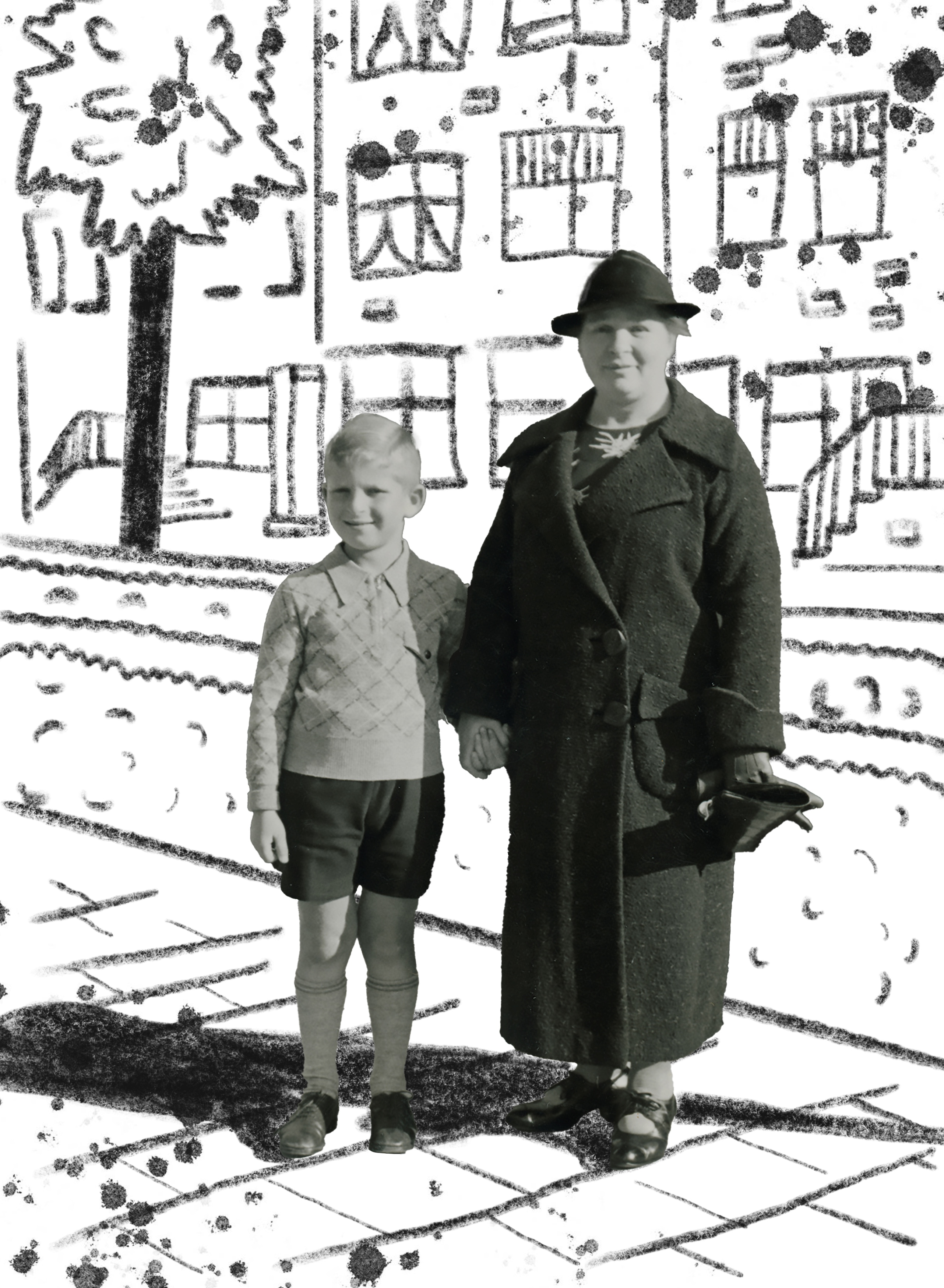
“Aunt Eva was arrested on the street in late November, 1942.” Weiter
We boys were at school, Father Jo was at work, and Aunt Eva was out visiting her sister, Aunt Gusti. Towards the afternoon, we all returned home, except for Aunt Eva. It was getting late and the curfew time was approaching. We wondered where she was and worried about her. We had no phones. We speculated. We vacillated between hope and unbearable anxiety. It was forbidden to be outside at such an hour.

© NIOD, Beeldbank WO2, No. 96764
After arriving at the Hollandsche Schouwburg collection point, the detainees were registered by employees of the Jewish Council. Both the cloakroom and the stage in the large hall of the former theatre building were used for this purpose.
After registration, the Jews had to hand over the keys to their flat. The German occupiers ordered their flats to be sealed and later cleared out.
“Father went to the Hollandsche Schouwburg early the next day.” Weiter
Father Jo found out that Aunt Eva was among the detainees and ran to the Jewish Council to try to rescue her. His characteristic persuasiveness and determination did not help this time. He was unable to get her released, but with the help of influential acquaintances, he was promised that they would do their best to keep her from being deported from Westerbork to the East.
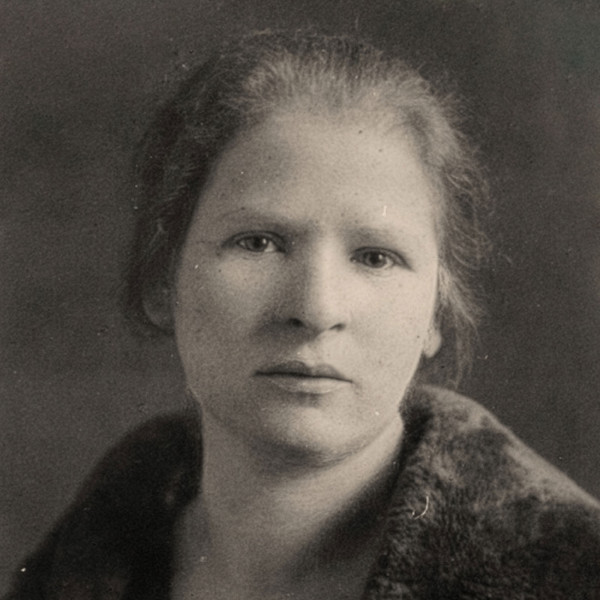
Eva Kimel-Goldberg
1893-1943
“Despite the promise to Father Jo that Aunt Eva would be kept in Westerbork, she was not. On 18 May 1943, she was deported to Sobibor extermination camp and murdered upon arrival.”
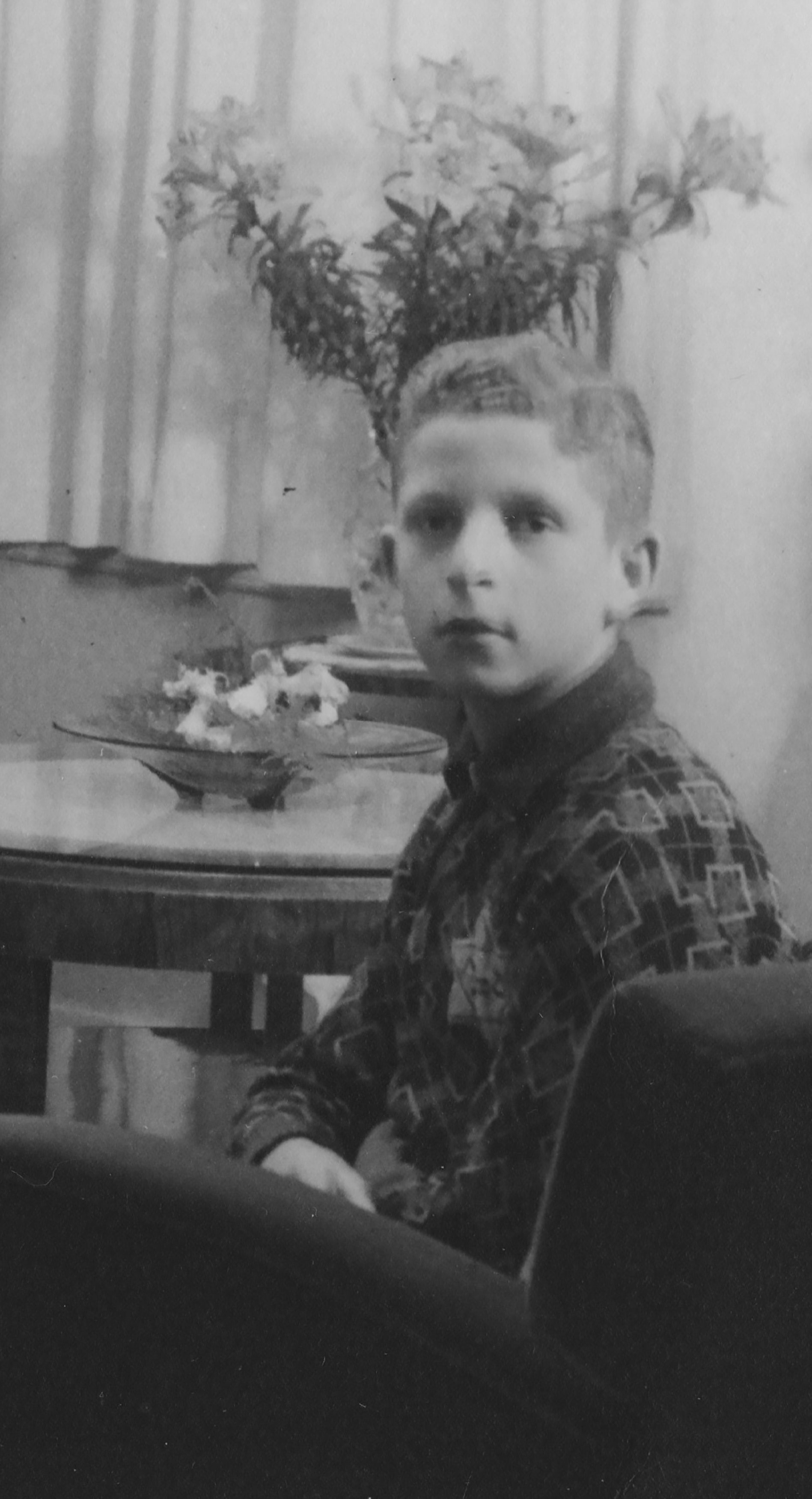
© Private property of the Rinat family
Aunt Eva’s arrest increased the likelihood that Ab Reiner’s cousin Sol would also be detained. A neighbour alerted the family to this. Sol had to go into hiding and later went underground.
“Shortly after Sol turned 14, he had to go into hiding. He was accompanied by a stranger to Hoogeveen in the northeast of the country.”
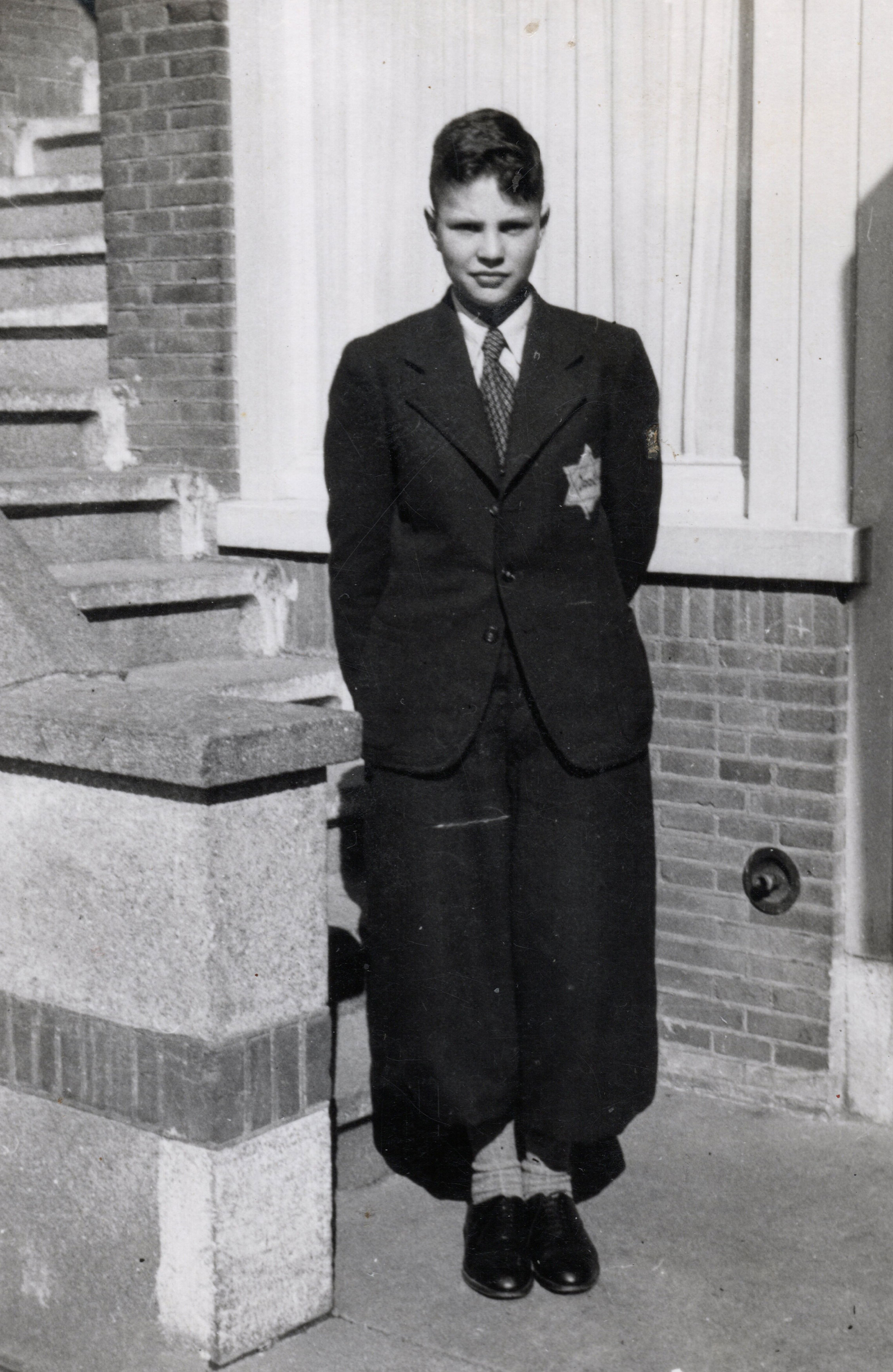
© Private property of the Rinat family
“One night, Nazi and Dutch policemen came to our house to arrest us.” Weiter
Right behind them, our neighbour, Dr. Zubli, appeared in his pyjamas and pointing at Marco, declared: “This boy has scarlet fever” (a contagious disease that Germans greatly feared). He lied to chase them away and save our family. They did indeed leave, but said that they would send a doctor over the next day, which never happened. The Nazis, who had no difficulties declaring someone with physical, mental or psychological defects “fit for work” and sending them “to the East” were terrified by the possibility of an epidemic. Our neighbour saved our lives.
“This experience put an end to the dilemma, and Father finally decided we had to hide.”
How aware were the neighbours of the arrests?
On 20 June 1943, many Jews had to gather on the plaza where the Reiner family lived. They had been arrested during a raid and were subsequently deported. There are several photographs of this.
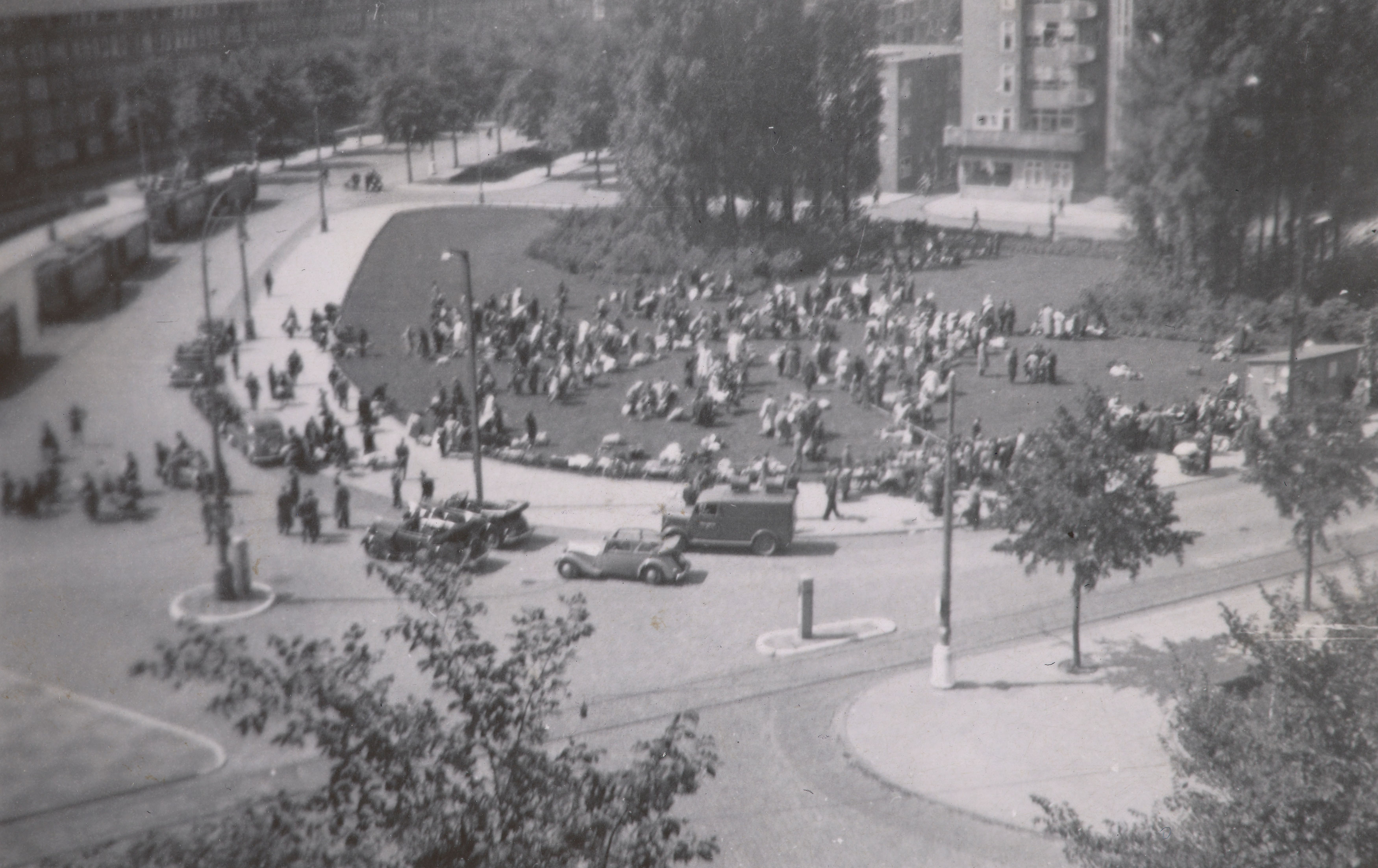
© NIOD, Beeldbank WO2, No. 96803
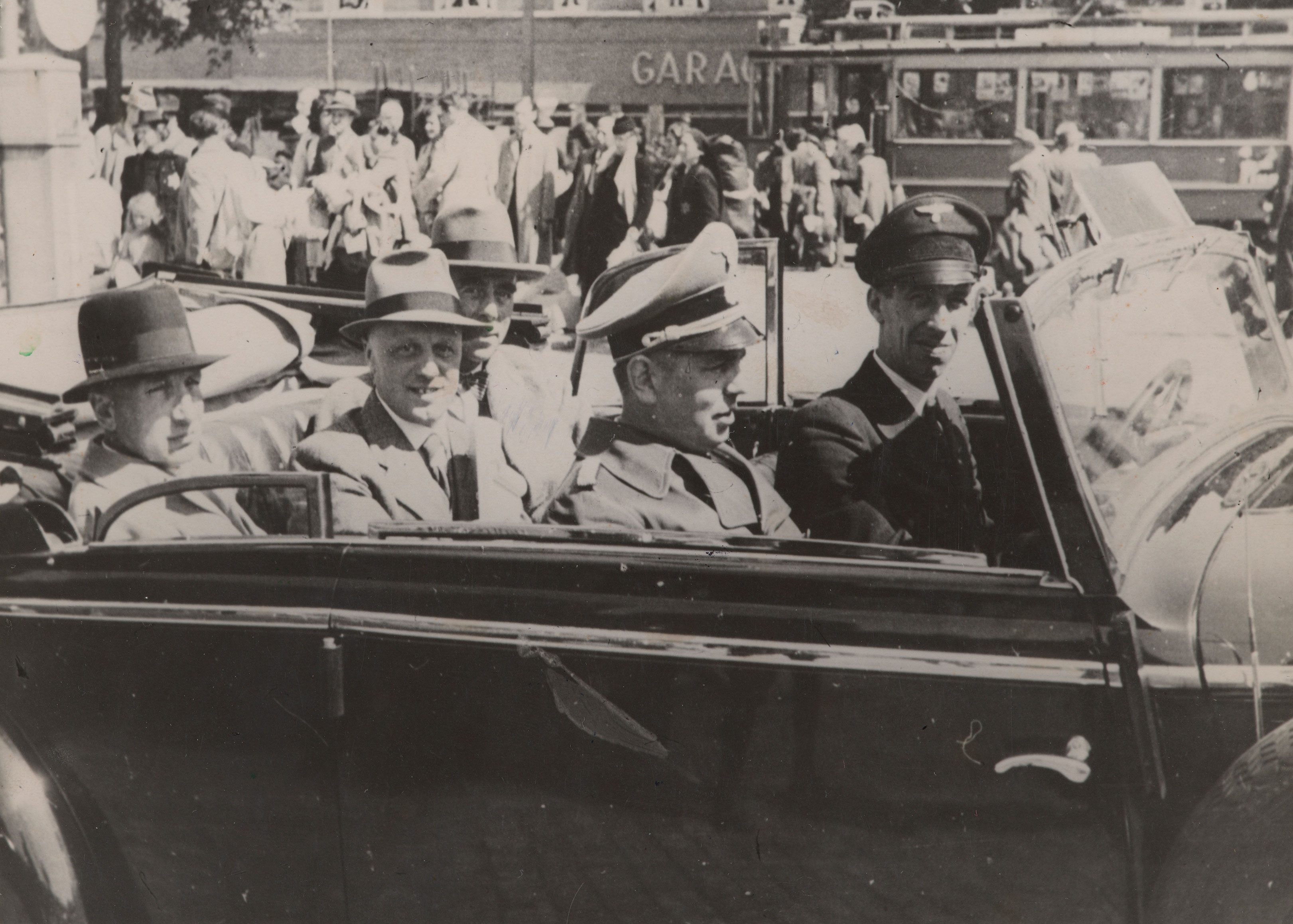
Employees of the Central Office for Jewish Emigration in Amsterdam had planned the raid and observed its progress on 20 June 1943. They sat in a car parked at the edge of the Daniël Willinkplein. Dr Werner Schröder, representative of the Central Office for Amsterdam, sat in the passenger seat. Alois Gombault, Schröder’s assistant, sat in the middle in back.
This photo was taken by Dutch photographer Lambertus Jasper de Kok. He had joined the NSB in 1940 and began taking photographs for the German occupying forces in 1941. His pictures show the perspective of a propaganda photographer and captured events that other photographers had no access to.
What happened to the belongings that the arrested Jews had to leave behind?
The German occupiers claimed the property for their own use. They commissioned Dutch transport companies to clear out the abandoned flats. The household goods and furniture were to be sent to Germany.
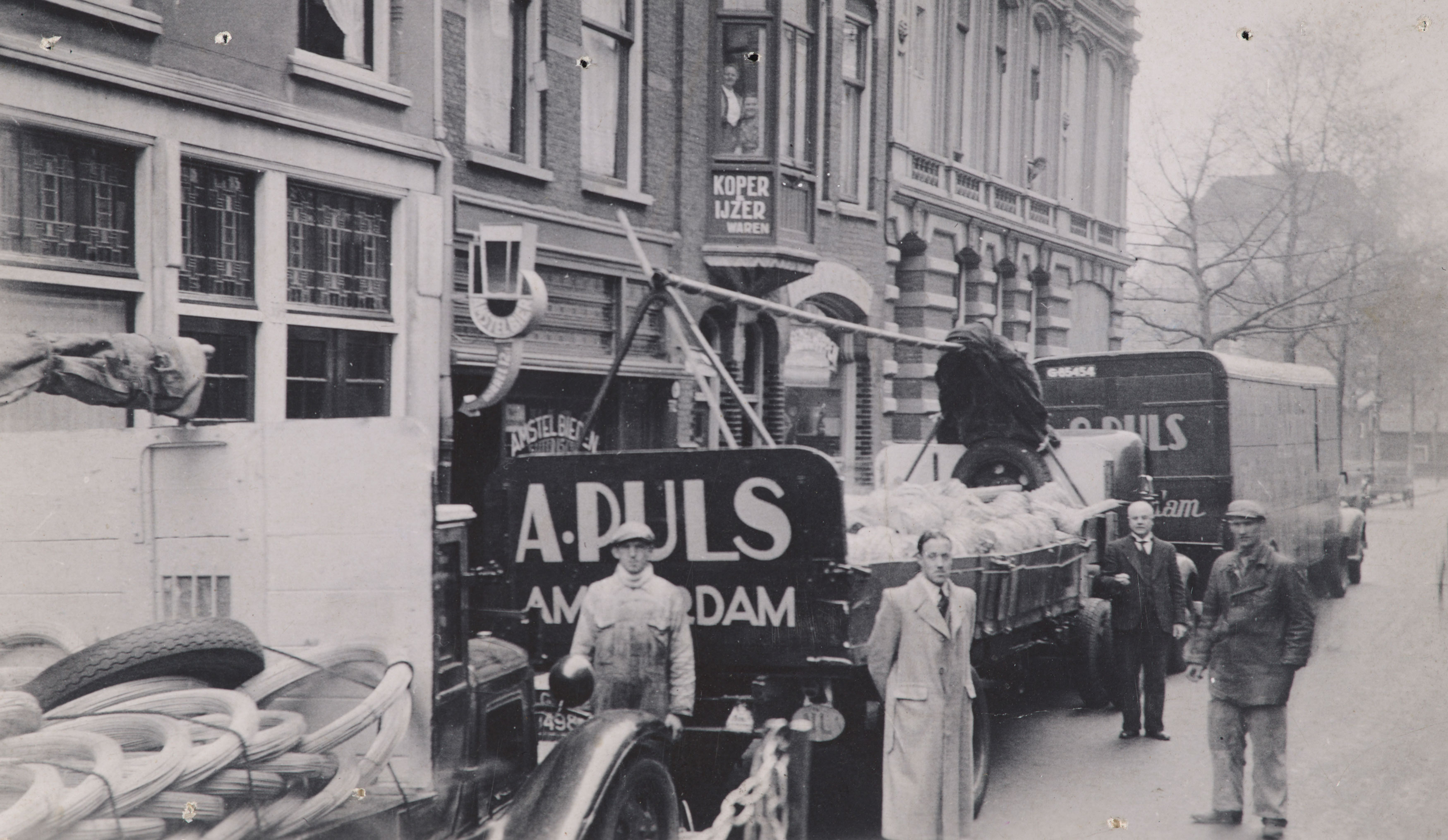
© NIOD, Beeldbank WO2, No. 96828
In Amsterdam, Dutch entrepreneur Abraham Puls was instructed to collect the belongings of deported or missing Jews. This gave rise to the colloquial expression “Pulsen”, which referred to clearing out flats and stealing property.
Because the household goods and furniture had to be sent to Germany, everything was carefully recorded. However, neighbours and employees of the Puls company helped themselves to certain items. Many objects were stolen or embezzled and bought by Dutch dealers on the black market.
“The last stage of theft entailed emptying the flats of Jews who had been deported to the camps.”

How did the Tal family respond to the mass arrests?
Father Sander and Mother Fré knew that their work for the Jewish Council temporarily protected their family from arrest. At the same time they tried to obtain permission to emigrate to Palestine.
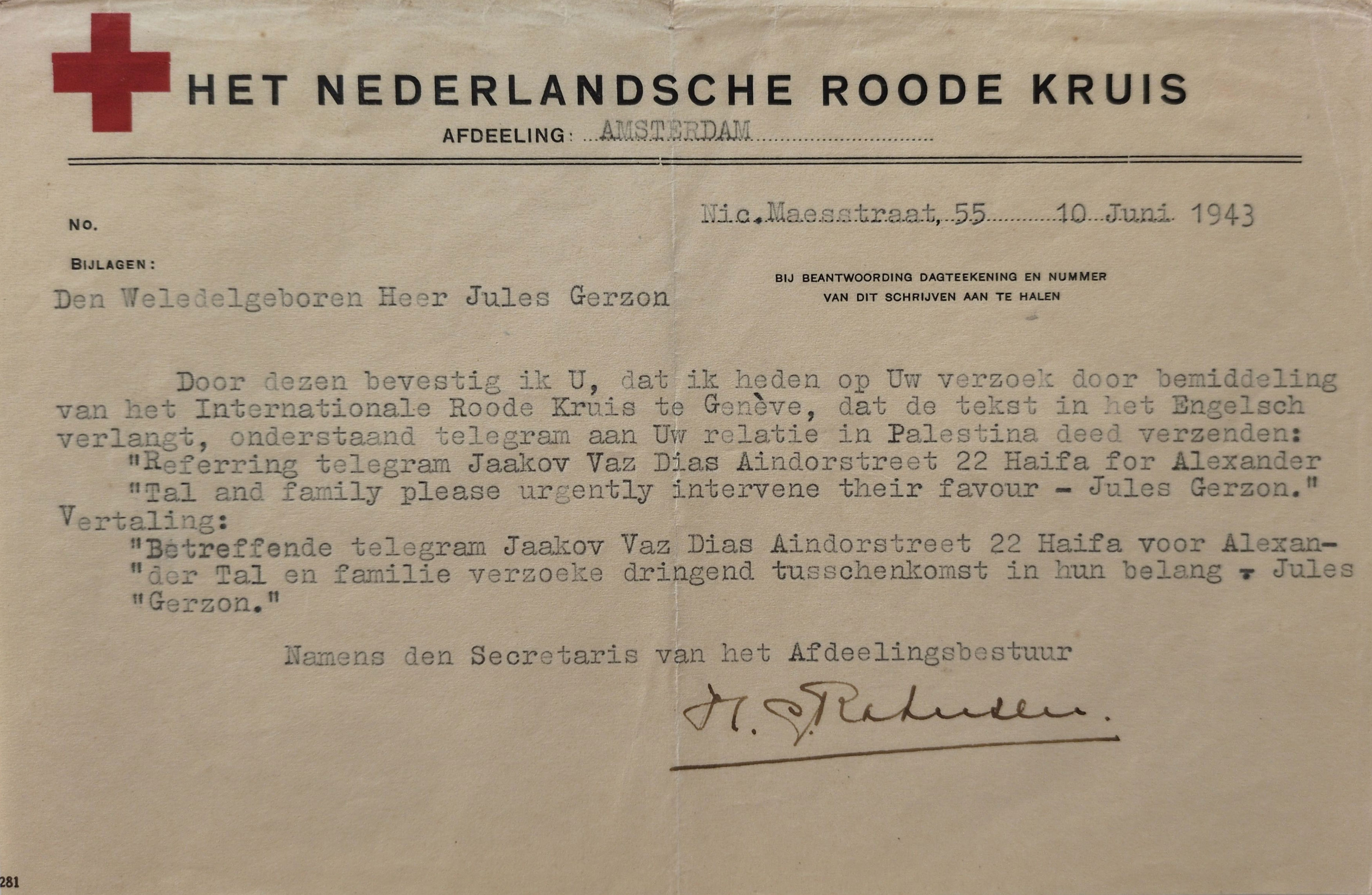
© Private property of the Tal family
Transcription
Amsterdam Branch
Nic. Maesstraat 55; 10 June 1943
Enclosures: Honourable Mr Jules Gerzon
I hereby confirm that, at your request and through the mediation of the International Red Cross in Geneva, which requires the text in English, I have sent the following telegram to your contact in Palestine: ‘Referring telegram Jaakov Vaz Dias Aindorstreet 22 Haifa for Alexander Tal and family please urgently intervene in their favour – Jules Gerzon.’
Translation:
„Betreffende telegram Jaakov Vaz Dias Aindorstreet 22 Haifa voor Alexander Tal en familie verzoeke dringend tusschenkomst in hun belang – Jules Gerzon.“
On behalf of the Secretary of the Branch Executive Committee
[Signature]
“How did we escape?” Weiter
Our story is not widely known. It is a story of initiative, resourcefulness, and cooperation. The plan involved Dutch veterans in Palestine trying to get certificates from the government of Mandatory Palestine for relatives and friends in the Netherlands. They hoped that the status of the certificate holders would eventually improve in the eyes of the Germans, and possibly save them. This plan should be understood as an act of resistance, even though it did not involve arms. Contact with people in Palestine was established through the Red Cross, via the Office of the Jewish Agency in Geneva.
That’s how our families got the certificates.
How did the Tal family prepare for their own arrest?
The Tal family prepared their luggage in case they were arrested. Each person had a packed knapsack that was always ready to go.
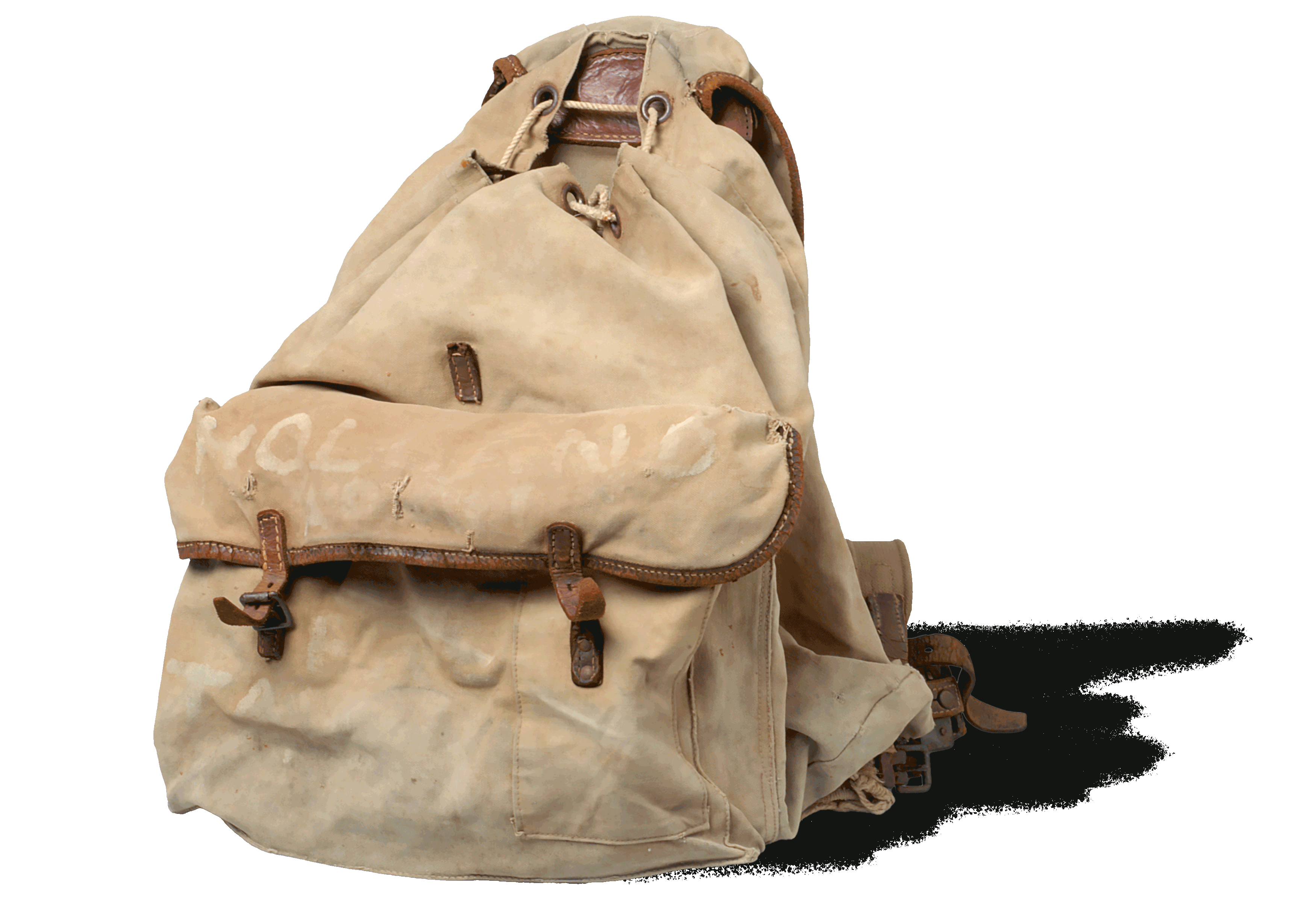
© Private property of the Tal family
“It was clear that at any moment it could happen to us as well ... they could come and arrest us.” Weiter

We each had a knapsack ready: clothes and toiletries. Ruth and I also packed writing and drawing tools and a doll... Just one doll for the two of us to share, to save space. We made a list of the contents of the knapsacks, and if we took something out, we had to list it and, of course, make sure it was returned.
Why was the Tal family arrested in late September 1943?
On 29 September 1943, the Amsterdam Jewish Council members were arrested along with their families. The Tal family was among them, including Grandmother Ronetta Vaz Dias and the family’s German ‘foster child’, Marion Amster.
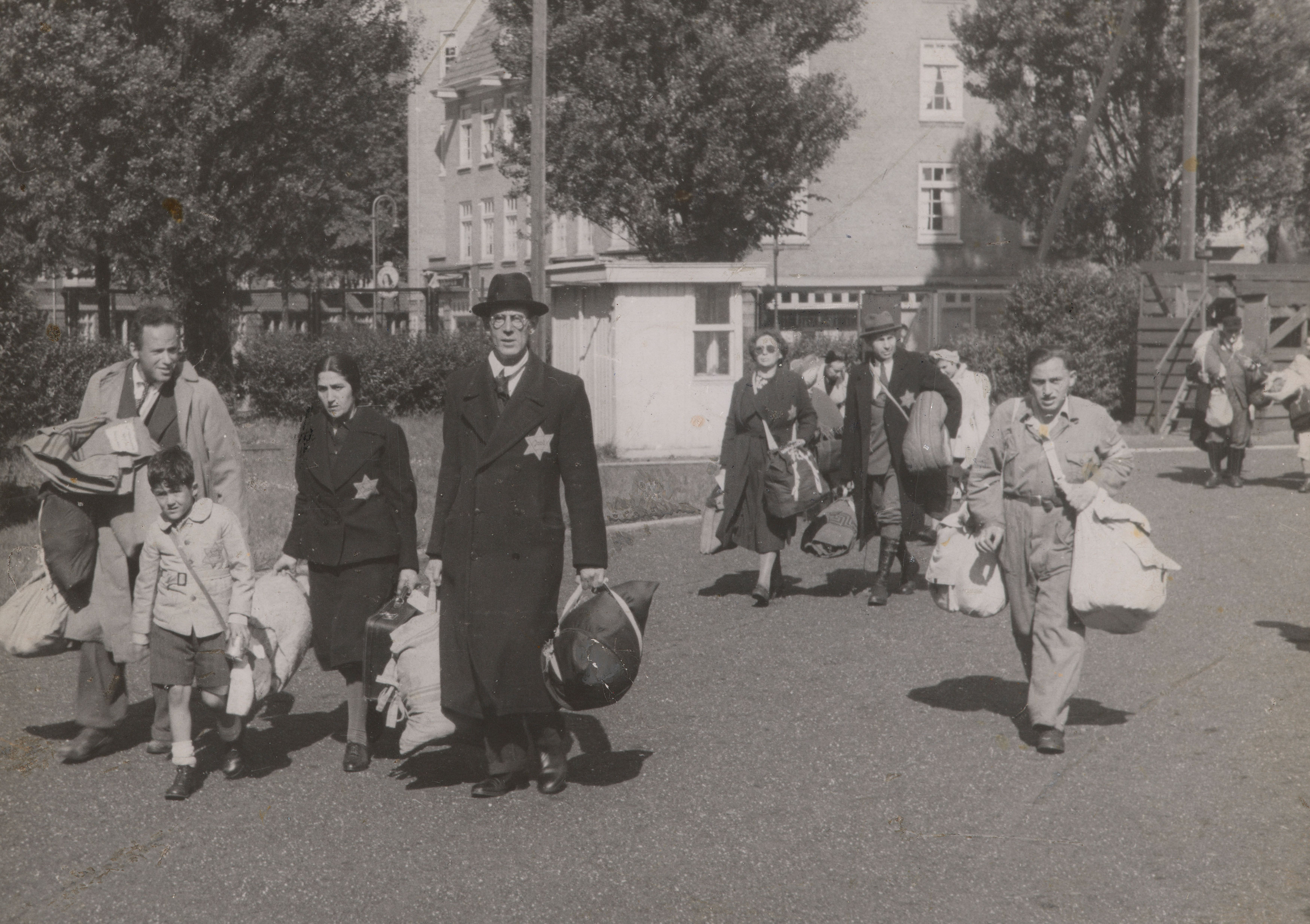
There are no photographs of the final raid, during which the Tal family was arrested along with other members of the Jewish Council. Chanan chose this photograph to show how the arrest was carried out.
A Dutch photographer took this photograph for the German occupiers. It was taken near the sports complex at Olympiaplein in Amsterdam. Jews from the surrounding area had to gather there on 20 June 1943.
“It happened on New Year’s Eve 5744, 29 September 1943: The house was filled with Dutch policemen and German soldiers. They had come to arrest us.” Weiter
We picked up our knapsacks and went downstairs. I remember we stood on the pavement in front of the door: Father, Mother, Marion, Chanan, Ruth and I, and Grandma Netta, who was staying with us for the holiday.
Father had a huge knapsack, in which he packed belongings from all of us along with his own. Suddenly he lost his balance and fell on his back… with his heavy knapsack. It was a moment of panic, and then he got back up and found his footing again.
“Dutch policemen led us like criminals to the nearest police station and drove us by truck from there to the train that brought us to the Westerbork transit camp.” Weiter
That was the last round of arrests. A day later, the Netherlands was officially declared "judenrein", free of Jews.
We were in the process of getting certificates for immigration to Palestine, which is why we were sent to Westerbork on the very last transport.